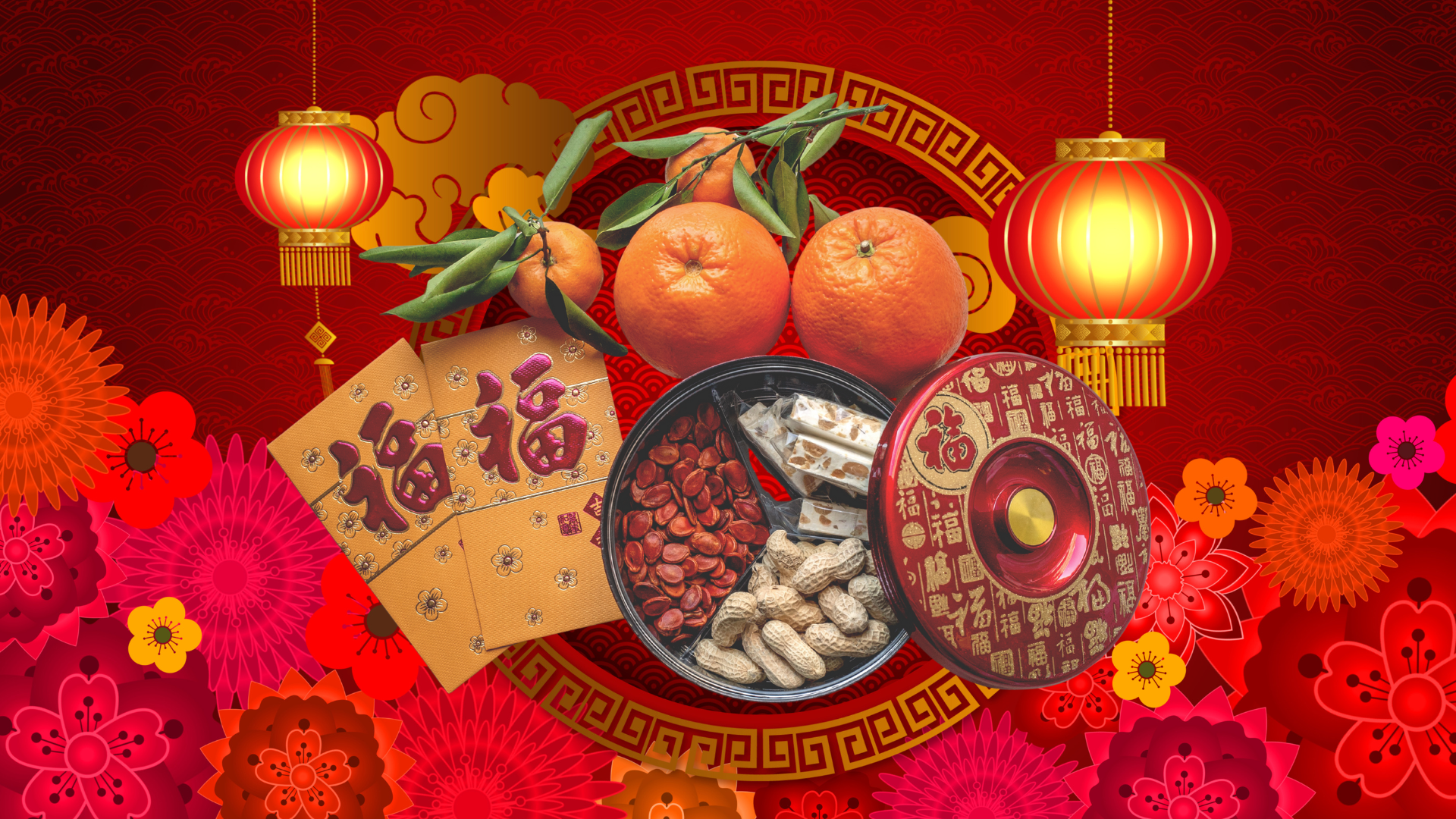
“民以食为天 — Food is heaven for the people.” — Chinese Proverb
Discover the lucky foods for Chinese New Year: What the lucky dishes are and what they mean in Chinese culture, particularly to Cantonese people (Chinese southerners), and why each dish brings good luck for us. Hint: these lucky foods all start with words. Lucky words carry an auspicious meaning.
Let’s eat! There is no better phrase in all human languages to express joy and celebration than this! And during Chinese New Year, you don’t just eat. You eat your well wishes. Every dish carries meaning, good omen, and blessings. With so much yang, there is also yin. This article helps you understand the cultural meanings behind the lucky foods for the Chinese New Year and the taboos to avoid!
Every dish on the reunion dinner table carries meaning — prosperity, longevity, togetherness, and good fortune. The fish isn’t just a fish. The noodles aren’t just noodles. Each bite is a hope for the year ahead, wrapped in centuries of tradition and served with love.
The Chinese New Year feast is the most important meal of the year. Families travel thousands of miles to gather around this table. Arguments are set aside. Work is forgotten. For one night, nothing matters more than being together — and eating very, very well.
Ready to discover what makes each dish lucky? Let’s feast!
YEAR-END REUNION DINNER
On Chinese New Year’s Eve, families across China and Chinese communities worldwide gather for 年夜饭 (Nián Yè Fàn) — the reunion dinner. It’s the Super Bowl, Thanksgiving, and Christmas dinner rolled into one, multiplied by 1.5 billion people.
Grandparents take the seats of honor. Children run between the kitchen and the table. The feast unfolds over hours — dish after dish, each more auspicious than the last. And every single item on that table? Chosen with intention.
In Chinese culture, food isn’t just sustenance. It’s language. The Cantonese especially love wordplay, selecting dishes whose names sound like wishes for good fortune. A fish isn’t served because it tastes good (though it does). It’s served because 鱼 (yú) sounds exactly like 余 (yú) — meaning “surplus” or “abundance.”
This is edible poetry. And it’s delicious.
8 LUCKY FOODS FOR CHINESE NEW YEAR CELEBRATION
Why eight foods? Because 八 (bā) sounds like 发 (fā), meaning “to prosper” or “to get rich.” It’s why the Beijing Olympics opened on 08/08/08 at 8:08 PM. It’s why Chinese phone numbers with multiple 8s sell for thousands of dollars. And it’s why we’re giving you exactly eight lucky foods to know.
1. Whole Fish — Abundance
Chinese: 鱼 (Yú)
The star of the reunion dinner. A whole fish — head, tail, and everything in between — symbolizes a year of abundance and surplus.
The magic is in the sound: 鱼 (yú) is a perfect homophone for 余 (yú), meaning “surplus.” When you eat fish at Chinese New Year, you’re literally saying, “May we have more than enough.”
The rules: The fish must be served whole (completeness from start to finish). The head should point toward elders or honored guests. And traditionally, you shouldn’t finish it — leaving leftovers symbolizes surplus carrying into the new year.
Best preparation: Steamed with ginger and scallions, drizzled with hot oil and soy sauce. Simple. Perfect.
Fun Fact: In Cantonese tradition, never flip the fish over! Remove the skeleton to get to the bottom meat. Why? Because flipping the fish symbolizes flipping a boat upside down. Bad luck!
2. Dumplings — Wealth
Chinese: 饺子 (Jiǎozi)
Those pleated pockets of joy aren’t just comfort food — they’re edible gold ingots.
Dumplings are shaped to resemble ancient Chinese currency: the yuanbao, a boat-shaped gold or silver ingot used during the Ming Dynasty. Eating dumplings during the Chinese New Year symbolically means stuffing your future with wealth and fortune. Eating it all in!
The tradition: Families gather to make dumplings together on New Year’s Eve. It’s not about efficiency — it’s about togetherness. Sometimes, a coin is hidden in one dumpling. Whoever finds it gets extra luck for the year.
PRO TIP: The more dumplings you eat, the more wealth you’ll accumulate. (At least, that’s what we tell ourselves on the third plate. My dear mother loved to serve up dumplings en masse!)
3. Longevity Noodles — Long Life
Chinese: 长寿面 (Chángshòu Miàn)
The longer the noodle, the longer your life.
These aren’t your average noodles. Longevity noodles are stretched by hand into impossibly long strands — sometimes several feet! They symbolize a wish for a long, unbroken life.
The cardinal rule: Never cut your noodles. Never break them. Slurp them whole. Cutting noodles during the Chinese New Year is like cutting your own lifespan. (No pressure.)
Best enjoyed: In a simple broth with a soft-boiled egg, or stir-fried with vegetables. The taste is secondary to the symbolism — but they’re delicious anyway.
4. Spring Rolls — Wealth
Chinese: 春卷 (Chūnjuǎn)
Golden, crispy, and shaped like bars of gold. Spring rolls are basically edible treasure.
Their golden-brown color after frying resembles gold bars, making them symbols of wealth and prosperity. The name “spring roll” also connects to the Spring Festival (another name for Chinese New Year), making them doubly auspicious.
Regional note: In southern China, fresh spring rolls wrapped in rice paper are popular. In the north, fried versions reign supreme. Both bring good fortune.
5. Nian Gao — Rising Success
Chinese: 年糕 (Nián Gāo)
This sticky rice cake is a Chinese New Year’s essential — and a masterclass in Chinese wordplay.
年糕 (Nián Gāo) sounds exactly like 年高 (Nián Gāo), meaning “year high” or “increasing prosperity year after year.” Every bite is a wish for upward momentum — in career, wealth, and life.
Texture warning: Nian Gao is gloriously sticky. It’s often sliced and pan-fried until crispy on the outside, chewy on the inside. Addictively good, but pace yourself.
Symbolism bonus: The stickiness also represents family “sticking together” through the year.
6. Tangerines — Good Luck
The word “tangerine” literally sounds like “gold” in Cantonese.
Why is every Chinese New Year display overflowing with citrus? Sound symbolism strikes again.
In Mandarin, tangerine, 吉 (Jí), means “luck” or “auspicious.” Also, orange, 橙 (Chéng), sounds like 成 (Chéng), meaning “success.” And that golden-orange color? Pure prosperity energy.
Visiting friends and family? Bring tangerines with green leaves attached. The more green leaves, the better. Tagerines make ideal gifts–and your Cantonese hosts/hostesses will surely appreciate your thoughtfulness and cultural sophistication. The green leaves symbolize vitality, growth (hello, money and wealth), longevity, and the connection between generations.
Easy win: Even if you can’t cook a full feast, a bowl of tangerines on your table instantly brings Chinese New Year luck into your home.
7. Sweet Rice Balls — Family Unity
Chinese: 汤圆 (Tāngyuán)
These soft, round glutinous rice balls — often filled with sweet sesame or red bean paste — are the ultimate symbol of family togetherness.
汤圆 (Tāngyuán) sounds like 团圆 (Tuányuán), meaning “reunion” or “togetherness.” Their round shape represents completeness and unity. When families eat them together, they’re celebrating the unbroken circle of loved ones.
When to eat: Traditionally served on the Lantern Festival (Day 15), but many families enjoy them throughout the New Year period.
Texture: Soft, chewy, slightly sweet — like a warm hug in dessert form.
8. Whole Chicken — Prosperity & Togetherness
Chinese: 鸡 (Jī)
A whole chicken served at the reunion dinner symbolizes family unity and prosperity.
The word 鸡 (Jī) sounds similar to 吉 (Jí), meaning “luck” or “auspicious.” Serving it whole — head, feet, and all — represents completeness and togetherness.
Cantonese tradition: In Cantonese, “eating chicken” sounds like the phrase for “good things happening.” The feet are considered especially lucky (and delicious, if you know how to eat them).
Serving note: Like the fish, the whole chicken should face the eldest person at the table as a sign of respect.
Foods to Avoid
Just as certain foods bring luck, others carry unfortunate associations:
Don’t serve:
- White tofu — White is associated with mourning and funerals
- Porridge — Symbolizes poverty (save it for after the celebrations)
- Anything in sets of 4 — Four (四 sì) sounds like “death” (死 sǐ)
Don’t do:
- Cut your noodles — You’ll cut your longevity
- Flip your fish— Don’t turn over your fish, and leave some for surplus. It means profit.
- Eat unlucky numbers of dumplings — Stick to 6, 8, or 10!
Digestiv-TEA! Tea Pairings for the Feast
“饭后一杯茶 — A cup of tea after the meal.” — Chinese Ancient Wisdom
In Italy, they have Digestivo. In China, we have Digestiv-TEA!
After a rich, indulgent Chinese New Year feast — all those dumplings, that crispy pork, the gloriously oily spring rolls — your stomach needs a hero. Enter: tea.
Chinese families have known for centuries what Western science is just catching up to: certain teas aid digestion, cut through grease, and settle the stomach. Here’s how to pair your feast:
| Dish | Best Tea | Why It Works |
|---|---|---|
| Dumplings & Spring Rolls | Pu’erh 普洱 | The king of digestive teas — cuts through oil like nothing else |
| Whole Steamed Fish | Oolong 乌龙 | Light and floral, balances delicate flavors |
| Rich Braised Meats | Pu’erh 普洱 | Aged Pu’erh handles heavy, fatty dishes beautifully |
| Nian Gao (Sticky Rice Cake) | Chrysanthemum 菊花 | Cooling and cleansing, perfect palate reset |
| Dim Sum Spread | Jasmine or Pu’erh | The classic Hong Kong pairing! |
| After the Feast | Tie Guan Yin 铁观音 | The “prosperity tea” — settling, floral, perfect finale |
Tip: After your CNY feast, reach for aged Pu’erh or fragrant Oolong tea. Chinese families have known this digestive secret for thousands of years. The tannins and polyphenols naturally cut through richness and settle the stomach.
Curious which tea to order at dim sum? We’ve got a complete guide: What Tea to Drink at Dim Sum
Regional Flavors
“十里不同风 — Every ten miles, a different tradition.” — Chinese Saying
Chinese New Year food varies beautifully across regions:
Northern China: Dumplings dominate. Families spend hours folding hundreds of them together. The dumpling is king.
Southern China & Hong Kong: Dim sum, whole steamed fish, Nian Gao, and elaborate multi-course feasts. Cantonese cuisine shines.
Sichuan: Expect spice. Even New Year dishes get the málà treatment.
Diaspora communities: Beautiful fusion traditions emerge — adapting ancestral recipes to local ingredients while keeping the symbolism alive.
No matter where you celebrate, the heart remains the same: family, food, and fortune.
Celebrate with Tea
“以茶会友 — Through tea, we meet friends.” — Chinese Proverb
The Chinese New Year feast is more than a meal. It’s a love letter written in food — every ingredient chosen to wish your family health, wealth, and happiness in the year ahead.
So gather your loved ones. Steam the fish (don’t flip it!). Fold the dumplings. And when the feast is done, brew a pot of tea and let the conversation flow.
Gong Hey Fat Choy! 恭喜发财!🧧🍜🍵
May your table be filled with lucky foods and your New Year be filled with blessings. 🍜🍵
Gong Hey Fat Choy!

Brimming with zest. Consummate cultivator of ideas from sparks to fruit-bearing adventures. I love pursuing worthy causes elevating the human spirit. Care to join me for tea?