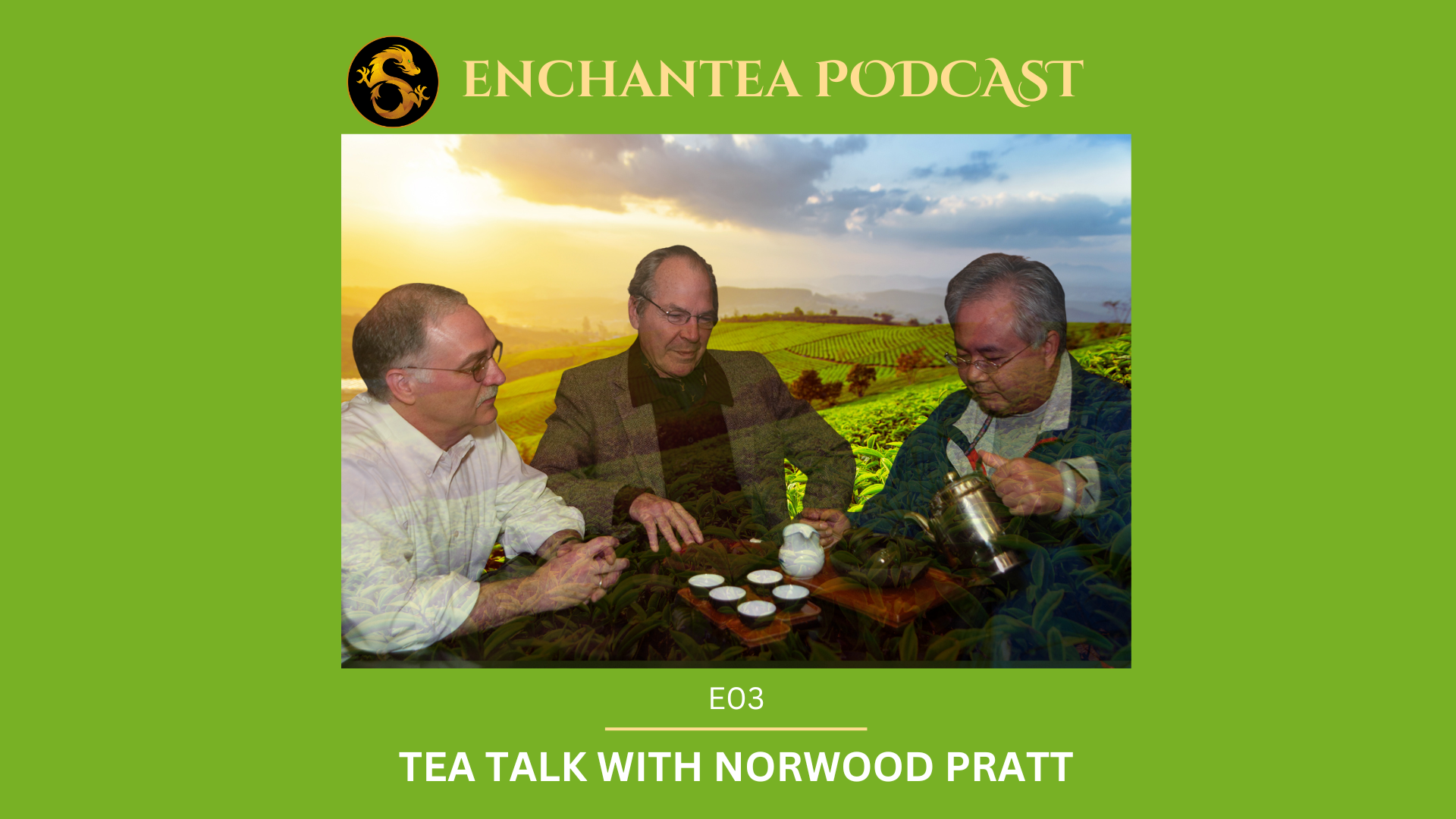
ENCHANTEA TALK WITH THE AMERICAN TEA SAGE
When China—the birthplace of tea—crowns you the “American Tea Sage,” you know you’ve been knighted by the mystical tea realm.
Norwood Pratt is the legendary tea author whose groundbreaking book “Tea Lover’s Treasury” (1982) ignited America’s tea renaissance and transformed how the Western world thinks about this divine beverage. In this heartfelt conversation, Norwood shares his extraordinary 40-year tea journey—from his ancestor Penelope Barker’s “pernicious” teapot at the Edenton Tea Party to witnessing America’s tea industry grow from $1 billion to $14 billion.
IN THIS EPISODE, YOU’LL DISCOVER
- The story behind “Tea Lover’s Treasury” (1982) — the first English book in 50 years to treat tea like fine wine
- How America’s tea industry grew from $1 billion to $14 billion over 40 years
- The Edenton Tea Party — how Norwood’s ancestor Penelope Barker led America’s first tea protest (before the Boston Tea Party!)
- The Chinese philosophy of Heaven, Earth & Man and how it shapes every perfect cup
- Why Norwood transitioned from California wine to tea: “Pleasure is far too serious to take lightly.”
- American-grown tea you must try: Mississippi Tea Company’s Black Magnolia
- Norwood’s perfect cup: Lushan Yun Wu green tea — one of China’s rarest teas
STORY HIGHLIGHTS
6:33 – America’s First Dynasty of Tea
8:05 – From Wine to Tea: “Pleasure Is Too Serious to Take Lightly”
9:02 – Heaven, Earth & Man: Chinese Tea Philosophy
11:28 – The First English Book to Treat Tea Like Wine
1:00:29 – American-Grown Tea: Mississippi Tea Company
1:04:11 – The Perfect Cup: Lushan Yun Wu Green Tea
1:07:03 – “Tea Is a Calling”
ABOUT NORWOOD PRATT
Norwood Pratt holds one of the most prestigious honors in the tea world: China, the Motherland of Tea, crowned him the “American Tea Sage.” His name appears in the introduction to the Classic of Tea in the Library of Chinese Classics—a distinction he likens to being knighted.
For over four decades, Norwood has been tea’s literary voice in America, reviving the nation’s tea consciousness and transforming how an entire continent thinks about this divine beverage.
NORWOOD PRATT’S CONTRIBUTION TO TEA
- “Tea Lover’s Treasury” (1982) — The groundbreaking book that ignited America’s tea renaissance. It was the first English-language book in over 50 years to treat tea with the same reverence as fine wine.
- “The New Tea Lover’s Treasury” — The beloved updated edition, available on Amazon with an audiobook version.
- “Tea Dictionary” — A pioneering reference work and the first English tea book to include Chinese characters for tea terms.
- TeaTime Magazine Contributor — Sharing his tea wisdom with readers across America.

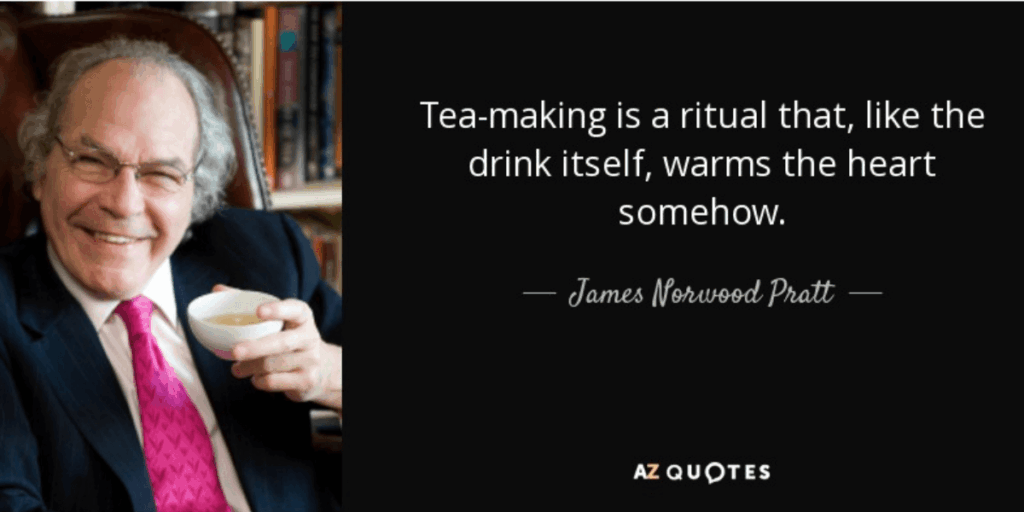
“Tea is surely the subtlest thing our tongues can detect.”
PODCAST TRANSCRIPT
Christy Hui: Today, I am thrilled to share this cup of tea with my good friend, my tea friend, Norwood Pratt, who is actually called by the Chinese, the American Tea Sage.
Now coming from the birthplace of Tea, China itself, it’s quite an honor, isn’t it, Norwood?
Norwood Pratt: How did you know that occurred? I’m so proud to be mentioned in the introduction to the Classic of Tea in the Library of Chinese Classics. That’s like being knighted, don’t you think?
Christy Hui: Yes, indeed. Because when I picked up another piece of giant work of yours besides this lovely book, Tea Lover’s Treasury—which by the way, is a fascinating book and well done—and also I have the pleasure of reading your second book, which is your Tea Dictionary.
Norwood Pratt: Yeah.
Christy Hui: With Chinese and English. And I thought to myself, oh my, and this is before I knew that you were crowned the American Tea Sage. And I thought that was a well-deserved title because you had incorporated the Chinese name into this tea dictionary.
Norwood Pratt: That was the first time in an English-language book on tea that the Chinese name was in print there.
Christy Hui: I love it. So, since your groundbreaking book, The Tea Lover’s Treasury, first enchanted the tea world in 1982, you have been tea’s literary voice, reviving America’s tea consciousness and transforming how the American continent thinks about this divine beverage.
So for over four decades, Norwood has witnessed and guided America’s tea renaissance from its infancy to its remarkable growth. When you started, it was $1 billion in annual sales in America. Today it is $14 billion. That’s 14 times over the span of 40 years, Norwood.
Norwood Pratt: Now that looks like our tea friends. And we have made some progress in this country.
Christy Hui: Indeed. Just a little bit of progress. 14 times, little bit over 14 times. You’ve done a marvelous job, my friend, along with many tea experts, I am sure. And this is why we are having a call today, for you to share your amazing tea stories along this journey.
People whom you inspired, and they inspire you, and made an impact in your tea journey and the American tea industry. I want to start with your brilliant book. And by the way, your tea brother Bruce Richardson loved your book.
And he says that he used to study it all the time when he first started his tea journey. And like I said, you had me at the prologue. Can you paint the picture for me just a little bit about Mrs. Barker and her old teapot, and her pernicious custom of drinking tea?
Norwood Pratt: I certainly can tell you my early American ancestors included Penelope Barker, who was a prominent citizen in the 1700s, a prominent citizen of Edenton, North Carolina.
And she and her friends got together to declare that they would do without tea. This was part of the lead up to the American Revolution, and it was the Edenton Tea Party. It preceded the Boston Tea Party, and there were five or six others—Charleston, South Carolina, somewhere in New Jersey, and New York. Other places had people renouncing tea. And Penelope Barker and her prominent social friends sent a letter to the London Times announcing that they wanted all their friends in London to realize that they had renounced the pernicious custom. It was questioned by some doctors if tea was good for you.
So that pernicious custom of drinking tea, which was only paying dues to the crown, was no longer going to be tolerated in Edenton. That’s what they said. And that pot came down in the family and was disputed by all the cousins who would have it. But I have brought tea made in Mrs. Barker’s teapot, and I thought it was better because it tasted pernicious.
Christy Hui: I love that line, by the way. I giggled when I thought, oh my gosh, what a great writer. I loved it. Those are the Daughters of Liberty, isn’t it?
Norwood Pratt: That’s right. And it was widespread amongst the British colonies here, and of course I had some ancestors involved.
Christy Hui: I love that tea has such an impact and deep history, the roots in our families. And now did you get that teapot? Did it come to you?
Norwood Pratt: It did not. I think it went to my cousin Carol Hayes after much discussion, by the way, amongst the first cousins. But wherever it is, Mrs. Barker is there with it.
So far America has been a footnote in the story of tea, which is over 5,000 years old, and as a country we’re not yet 400 years old. But after all, we are just now emerging from our first dynasty.
And if this is the end of our first dynasty and if we, like China, we can look forward to 20 or 30 more.
Christy Hui: Exactly. Thanks to America’s Tea Sage like you and all the wonderful friends that you have in the tea community, America is now contributing to about 18%, almost 20% of the tea consumption in the world.
So I said that we’ve done well, my friend.
Norwood Pratt: My role has been to be a friend to all the friends of tea.
And I am a friend to any friend of tea anywhere in the world. And we have a language in common, which of course is tea. And it does wonderful things for those who love it.
It makes people happier, I think. I think it makes them healthier. And I know that it makes them a lot less quarrelsome. We get along over a pot of tea.
Norwood Pratt: In a way that other drinks might make it more difficult to get along.
Christy Hui: Which I love. Which I love this line that you wrote. You very famously said, “Pleasure is far too serious to take lightly.” And you’ve described your transition from wine to tea as moving from the sacrifice of sobriety.
Christy Hui: Now, how did this shift shape your philosophy about life’s pleasure and ultimately lead you to become the American Tea Sage?
Norwood Pratt: I had the perfect training. I was first of all addicted to wine, and I had the training from California’s finest winemakers on how to taste. And what made it taste like that? It’s, as the Chinese would say, with grapes as well as with tea—it all comes from heaven, earth, and man. Heaven is everything above the layer of the soil.
Earth is everything below it. And man is the human factor, right? And so, thus prepared by wine, I was able to start enjoying something that is much more subtle than wine. Tea is surely the subtlest thing our tongues can detect. It is too much to say tea always has a taste. Sometimes it just has an effect on the palate.
And so you have to become very sensitive in order to really enjoy the very best teas. And this is not to say that other people are excluded from enjoying tea. You don’t have to train as a taster in order to get the pleasure from it. But pleasure is much too serious to take lightly. And so I’d like to taste it as closely as I could.
And that’s why I was interested in the plant itself, what it has to say, wherever it comes from. That’s tasting.
Christy Hui: I love that because in Chinese philosophy, and as you so poignantly described the three elements, it is the heaven, the earth, and humanity all in harmony. And I love that. And it is tea to the tee, because that’s how tea is made—from the best thing in heaven and the best thing on earth, the terroir, and made by good people.
Norwood Pratt: That’s right. And so I had the great advantage moving from my birthplace, North Carolina, to San Francisco.
And that was the only place where that book on tea could have been written. We had everybody there in the city, San Francisco. Of course, we had the largest Chinatown anywhere. We had a Japantown. We had more Indians than you could count. We had people from all over the world, and so that was the ideal place to learn about tea. And that book that you’re holding in your hands was the first book—the previous edition—it was the first book in English that takes tea seriously the way people have been writing about wine. The first book in over 50 years in English.
It could only have been done in San Francisco.
Christy Hui: That was the golden age of San Francisco.
Norwood Pratt: It certainly was one of the leading golden ages.
And I have to say that to have that opportunity opened me, and everybody who read me, to a world that had been closed to this country. And we had not become, when I wrote my first book about wine, we had not become a wine-consuming society. Now we are, we Americans. We were not a tea-consuming society either, Christy.
Christy Hui: And now we are.
Norwood Pratt: And now we are well on our way, aren’t we?
Christy Hui: Yes, we are. Well, it’s all thanks to you. But your first book about wine—how did you go into wine?
Norwood Pratt: Well, I was in San Francisco, and I was, at first, very interested in wine. So I wrote about wine for 10 years.
Christy Hui: And then tea seduced you?
Norwood Pratt: Yes, it did. And I think it seduces everybody at some point.
Christy Hui: Yes, it does. It’s magic. Yes. So your teacher on wine, your mentor, was this renowned wine expert in San Francisco?
Norwood Pratt: Well, my teacher was Darrell Corti, who is widely considered the most knowledgeable wine authority in the United States. He really knows wine. And that, he gave me lessons in tasting, and he taught me the importance of knowing your own palate. He said, “Norwood, you must learn what you can taste. You need to know what your own preferences are.”
And so I followed his advice, and I studied wine seriously, and I wrote about it for a number of years before I, one day, drank tea.
Christy Hui: Well, that was a wonderful day, wasn’t it? So tell me, do you remember that wonderful day?
Norwood Pratt: Yes, I do. I was in San Francisco’s Chinatown, and I was handed a cup of oolong tea. I had never had anything like it in my life. I was absolutely captivated by its fragrance and complexity. I thought, what else is there out there in the tea world?
And I started on a quest to find out everything I could about tea. And that led me to write Tea Lover’s Treasury.
Christy Hui: How magical! And so what was the tea? Was it a Ti Kuan Yin? Was it Wuyi Oolong?
Norwood Pratt: It was a Ti Kuan Yin. It was a Tieguanyin, and it was one of the best I’ve ever tasted. And I’ve tasted a lot of them since then.
Christy Hui: And who gave you that cup of tea? Do you recall?
Norwood Pratt: Yes, it was a tea merchant in San Francisco’s Chinatown named Roy Fong.
Christy Hui: Oh! Roy Fong of Imperial Tea Court!
Norwood Pratt: Yes, indeed.
Christy Hui: Oh, that’s a beautiful story. He is a mutual friend, and he actually appeared in my tea film as well.
Norwood Pratt: I’m not surprised. He is one of the most important tea people in America.
Christy Hui: Yes, indeed. And the Imperial Tea Court, I believe, is the first traditional Chinese tea house in America.
Norwood Pratt: Yes, it is.
Christy Hui: Yes, so there’s a wonderful connection there between you and Roy. So now let me talk about your wonderful book, Tea Lover’s Treasury, a little bit. After reading it, I felt like it was a magical carpet ride through the tea realm. What do you want your readers to take away from this book?
Norwood Pratt: I would like them to understand just how wonderful tea can be. It’s not just a drink. It’s a whole culture. It’s history. It’s art. It’s a spiritual practice for many people. And I wanted to bring all of that to my readers.
Christy Hui: And you certainly did. It’s a very comprehensive work. And like I said, your tea brother, Bruce Richardson, studied it as if it was a textbook.
Norwood Pratt: Well, Bruce is very kind to say that. He has done wonderful work himself, promoting tea in America.
Christy Hui: Yes. And then you guys are both my tea mentors. You know, when I started my tea documentary journey, I was looking for experts to speak on camera. And so I reached out to Bruce, and he recommended you highly.
Norwood Pratt: Well, it was very nice to meet you and to appear in your film.
Christy Hui: And it is an honor to have you. And I recall the interview that we did together, it was actually at the World Tea Expo.
Norwood Pratt: Yes, it was. That was a wonderful experience.
Christy Hui: And you shared so much wisdom in that interview, and some of it we were not able to use in the film, but we can certainly talk about it here in this podcast.
So you’ve traveled all over the world for tea, haven’t you?
Norwood Pratt: Yes, I have. I’ve been to China, Japan, Taiwan, India, Sri Lanka—pretty much everywhere that tea is grown.
Christy Hui: And which is your favorite tea destination?
Norwood Pratt: Well, every tea destination has its own magic. China, of course, is where it all started. And there’s such an incredible variety of teas in China that you could spend a lifetime and not try them all.
Christy Hui: Yes, absolutely. And speaking of China, have you been to the Wuyi Mountains?
Norwood Pratt: Yes, I have.
Christy Hui: Oh wonderful! And what was your impression?
Norwood Pratt: Magical. It’s absolutely magical. The scenery is breathtaking, and the teas from that region are extraordinary. The rock teas, the Yan Cha, they have a mineral quality to them that you don’t find anywhere else.
Christy Hui: Yes, we call it “Yan Yun,” which is the rock rhyme.
Norwood Pratt: Yes, exactly.
Christy Hui: It’s the essence of the rocks infused into the tea leaves because of the special terroir there.
Norwood Pratt: Exactly right.
Christy Hui: And you know, when I was filming in Wuyi Shan, I was just overwhelmed by the beauty of the mountains. And also the complexity and the depth of the tea culture there.
Norwood Pratt: Yes, it is one of the most special places on Earth for tea lovers.
Christy Hui: Absolutely. And the tea masters there, they’re so dedicated. Some of them are 11th generation, 12th generation.
Norwood Pratt: Yes, and that knowledge passed down through the generations is invaluable. You can’t learn that in a book.
Christy Hui: No, you cannot. And speaking of books, you mentioned earlier that your book, Tea Lover’s Treasury, was the first book in 50 years to treat tea like wine. Can you elaborate on that a little bit more?
Norwood Pratt: Well, before I wrote my book, most books about tea in English were either technical manuals for the trade, or they were kind of superficial guides. Nobody was writing about tea the way wine writers wrote about wine—with attention to terroir, to cultivar, to processing methods, to the whole experience of tasting.
I wanted to bring that kind of seriousness to tea. Because tea deserves it. It’s just as complex as wine, if not more so.
Christy Hui: Absolutely. And I think that’s why your book has been so influential. It elevated the conversation about tea.
Norwood Pratt: Well, I hope so. That was certainly my intention.
Christy Hui: And now, more than 40 years later, the tea world has grown so much. There are so many more books, so many more tea experts, so many more tea lovers.
Norwood Pratt: Yes, it’s wonderful to see.
Christy Hui: What do you think has driven that growth?
Norwood Pratt: Well, I think people are looking for something more meaningful in their lives. And tea offers that. It offers a moment of peace, a connection to nature, a connection to other cultures, a connection to history. In our busy, hectic world, tea offers a chance to slow down and appreciate the simple things.
Christy Hui: Beautifully said. And speaking of connection to other cultures, you mentioned in your book, and earlier in our conversation, about the Chinese philosophy of heaven, earth, and man. Can you tell us more about how this applies to tea?
Norwood Pratt: Well, the Chinese have understood for thousands of years that the best things in life come from the harmony of heaven, earth, and man. Heaven provides the climate—the sunshine, the rain, the temperature. Earth provides the soil, the minerals, the terrain. And man provides the skill, the care, the artistry.
When all three are in harmony, you get something truly extraordinary. And that’s what great tea is.
Christy Hui: That’s beautiful. And it’s not just for tea, is it? It applies to everything in life.
Norwood Pratt: Exactly. It’s a universal principle.
Christy Hui: Yes. Now, I want to talk about something you mentioned earlier that really intrigued me. You said that America is just emerging from its first dynasty.
Norwood Pratt: Yes, that’s right. America is a very young country. We’re not yet 400 years old. And if you look at China, which has had 20 or 30 dynasties over 5,000 years, we are just at the beginning of our story.
And if we’re lucky, and if we’re wise, we can look forward to many more centuries, many more dynasties, of growth and development.
Christy Hui: I love that perspective. It’s very humbling.
Norwood Pratt: Tea teaches humility. Every time you think you know something about tea, you realize there’s so much more to learn.
Christy Hui: Yes, absolutely. The tea realm is boundless and bottomless.
Norwood Pratt: Exactly.
Christy Hui: Now, let’s talk about some specific teas. You’ve tasted thousands of teas in your lifetime. Do you have any favorites?
Norwood Pratt: Well, that’s like asking a parent to pick a favorite child. Every tea has its own personality, its own character. But I will say that I have a special fondness for oolong teas.
Christy Hui: Ah yes! The tea that started your journey.
Norwood Pratt: Exactly. And oolong is so versatile. It can be lightly oxidized and taste almost like a green tea, or heavily oxidized and taste almost like a black tea. And everything in between.
Christy Hui: Yes, the spectrum is incredible.
Norwood Pratt: And the craftsmanship that goes into making a great oolong is extraordinary.
Christy Hui: Now, Norwood, you’ve been called the consummate spokesman for US tea consumers, and you help spread the gospel of tea to tens of thousands of people.
As you look into tea’s outlook moving forward, how do you feel about its continuing evolution in America?
Norwood Pratt: Now that tea has taken root here, we will become not just a tea-consuming country, but a tea-producing country. On a very small scale, of course. But people who have the real green thumb and are really attracted to tea oftentimes start their own little garden.
I have several dozen such friends who are growing tea for their own interest.
I don’t think many of them plan to sell it, but other people are making very creditable tea in this country. They’re good farmers. Look at Jason McDonald and the great Mississippi Tea Company. If you’ve never tried any of his Black Magnolia, let me recommend it. It is a very respectable, enjoyable American-grown black tea.
Norwood Pratt: From Brookhaven, Mississippi, my dear. You ain’t gonna beat that.
Christy Hui: That is phenomenal. Where do I get it?
Norwood Pratt: Just look up Mississippi Tea Company.
Norwood Pratt: That would be a good start.
Christy Hui: Yeah. That’s fantastic. Now for our listeners who have just begun their tea journey, what would you want them to understand about this divine drink, this ancient plant?
Norwood Pratt: It’ll make you feel good. You’ll like the way it makes you feel. That explains why tea has a history that goes back 5,000 years. Drinking tea is something people have gotten together to do since the pyramids were under construction. When you think about it, truly, that was 5,000 years ago, and that’s just about the time that those Chinese fathers, who were the forefathers of the Taoists, up in the mountains trying all the leaves they could to see what would taste good.
And they said, “Hey, now this one doesn’t taste too good, but it makes you feel good.” It took them a couple thousand years to get the taste to where they liked it, but they didn’t stop trying.
Christy Hui: If the Egyptians were to have tea, what kind of tea do you think they would have taken to?
Norwood Pratt: If the Egyptians, back when they were building pyramids, would’ve had any tea—which they couldn’t—if, why, I think that they would probably have most enjoyed green tea. Now, I’m not sure that green tea had been invented even in China at the time, but green tea is cooling, and Egypt is hot.
Norwood Pratt: I think that the green tea sellers would’ve outstripped others in that climate.
Christy Hui: And that, before they even discovered perhaps the green tea’s magnificent health benefits.
Yeah. I think Egyptian food would probably support that because it’s not that heavy.
Norwood Pratt: I don’t know Egypt. I do know Moroccan mint tea. And of course, they’re light on the tea and heavy on the mint in Morocco. And it is a delicious drink. I wish they’d add a little more tea.
Christy Hui: I think I would agree with you, Norwood, that if they would have tea then, I probably would say perhaps iced green tea.
Norwood Pratt: Yeah.
Christy Hui: But those two have not been invented.
Norwood Pratt: That’s right. And you could enjoy it best in the shade of a pyramid.
Christy Hui: Absolutely. Now, if you could steep the perfect cup to represent your work in tea, what would be in that blend?
Norwood Pratt: Christy, you are my tea sister and fellow tea lover, and that would vary with the time of year. I think that the perfect tea for me in the summertime would be a Lushan Yun Wu. That’s one of the smallest productions of Chinese tea, and it is probably very hard to find in America.
I’ve only had it through Roy Fong.
And I’m not sure Roy can still get it, but we sure got it and we sure have never forgotten. To find something that delicate anywhere would be something you would never forget.
Christy Hui: Now Lushan Yun Wu, is it a white tea? Yellow tea?
Norwood Pratt: No, it’s a green tea.
Norwood Pratt: And it comes from a mountain region. It was grown by monks originally, and a very limited area of production which just has the perfect climate for that particular cultivar and the perfect devotion from those particular tea-growing monks.
Christy Hui: This is what fascinates me in the tea realm. Every day you learn something new.
Norwood Pratt: Yes, you do.
Christy Hui: It’s bottomless.
Norwood Pratt: Now all of the earliest Chinese teas that we have names for come from mountains where there were Buddhist monasteries, mostly starting in Sichuan and spreading from there. It took centuries for tea growing and tea farming to spread from the interior all the way down to the coast.
And of course, they were pioneering all the way. Look at that, that kind of tea doesn’t like it in this weather or down here in this soil. So by the time they’d been prospecting and pioneering for centuries, they knew exactly where to grow tea.
Christy Hui: It’s the terroir.
Norwood Pratt: Yes. The exploration is unending.
Christy Hui: Unending, yes. Now, last question for you. You are a writer. You are a tea lover. You’ve been in this tea realm longer than I have.
And if you had to say something about what tea means to you, how would you describe tea?
Norwood Pratt: Tea is a calling, and you’re very lucky if you hear the call. And tea is a friend. And it will do all the things we’ve said. If you are overheated, it’ll cool you, and if you’re too chilly, it’ll warm you. And if you’re too excited, it’ll cool you off. And if you’re phlegmatic and unenergized, it’ll pep you up.
It’ll be hard to find a better friend than that.
Christy Hui: Beautiful. My tea friend. Thank you for your time.
Norwood Pratt: Tea Sister. My pleasure.
Christy Hui: Thank you all for listening and for this amazing sharing of tea stories with our tea teacher, American Tea Sage Norwood Pratt. His book, highly recommended by the way, is the new edition Tea Lover’s Treasury.
It’s on Amazon along with an audiobook version. Enjoy the read and enjoy this cup.

That’s all for this episode. I really enjoyed sharing this cup with you. For tea floats between us, bestowing her wisdom in the leaves. Remember, it’s not about the tea you drink, but the spirit you bring to your tea drinking.
Thank you all for listening. Until the next EnChanTEA. May the tea spirit embrace you.

Brimming with zest. Consummate cultivator of ideas from sparks to fruit-bearing adventures. I love pursuing worthy causes elevating the human spirit. Care to join me for tea?