
Chinese Tea Tasting
Why Does the Chinese Word for Tasting Have Three Mouths?
Gong Fu Cha: How China's Tea Masters Taste, Sip by Sip



TEA TIMELINE · 6TH CENTURY TO 1840
How Did Chinese Tea Tasting Begin?
Eight Ways to Taste Tea, From Tea Soup to Afternoon Tea
Chinese tea tasting grew over many centuries. Tea was cooked like a soup, then whisked into a froth, then steeped in a teapot. As tea spread around the world, each culture shaped its own way to taste it.

6th Century: Cooked Tea
Before China’s Tang Dynasty, tea was cooked like a soup. The leaves were boiled with ginger, mint and other ingredients.

8th Century: Powdered Tea and Lu Yu
In the Tang Dynasty, Lu Yu promoted powdered tea and wrote the Cha Jing (茶經), The Classic of Tea, the first known book on tea. The Tang poet Lu Tong (790–835) wrote “The Seven Bowls of Tea” (七碗茶歌). Legend has it that he was tasting Wuyi Rock tea.

10th Century: Whipped Tea
In Song Dynasty China, powdered tea was whisked with a bamboo whisk into a frothy drink. About 500 years later, Japan adopted this whipped tea as Matcha. Read the origin of Matcha green tea.

Ming Dynasty: Steeped Tea
Loose-leaf tea was born in Ming Dynasty China. Instead of whisking a powder, tea lovers steeped whole leaves in a teapot.

Zen Temples: The Zen Tea Ceremony
Buddhist monks made tea part of their practice. The Zen Tea Ceremony traces back to a temple on Mount Tai in Shandong. TEA: The Drink That Changed The World filmed it at the Mother Tree Temple in the Wuyi Mountains.

16th Century: Gong Fu Cha
Oolong was born in the Wuyi Mountains in the 16th century. To taste it, the region’s Buddhist monks created Gong Fu Cha (功夫茶), “tea made with skill.” It became the art of Chinese tea tasting.

1500s: The Japanese Tea Ceremony
Japan made whipped tea into Chanoyu (茶の湯), the Japanese Tea Ceremony, also called Chado, the Way of Tea. Read the history of tea in Japan.

1840: Afternoon Tea
In England, Anna, Duchess of Bedford, began taking afternoon tea in 1840. By the mid-1800s it had moved into London’s grand hotels.
Discover the art of Chinese tea tasting in the documentary, TEA: The Drink That Changed The World. Watch free at teadocumentary.com/watch, or stream ad-free on Amazon.

“Water is the mother, the teapot the father, fire the master.”
THE ART OF GONG FU CHA
When Black Dragons Enter the Palace
Gong Fu Cha unfolds in eight steps, each with a poetic name: Black Dragons Enter the Palace, High Mountain Flowing Water, General Patrols the City Wall. Christy Hui’s upcoming Gong Fu Cha book opens every step as the tea masters of the Wuyi Mountains taught it. Join the Book List and be the first to know.
"Cherish every cup of tea. Cherish every sip of tea."
— Old Daddy, 11th-generation Oolong tea master, Wuyi Mountains, in TEA: The Drink That Changed The World
12TH-GENERATION OOLONG TEA MASTER
The Highest Form of Tea
When tea is superior, they simply smile and nod. There's no need for words. This is the highest form of tea.
— Master Huang, 12th-generation Oolong tea master, Wuyi Mountains, China · in TEA: The Drink That Changed The World
In the film, Master Huang explains that 品, the Chinese word for tasting, is made of three mouths: three tea lovers tasting together.
FROM THE FILM
Chinese Tea Tasting at the Birthplace of Gong Fu Cha
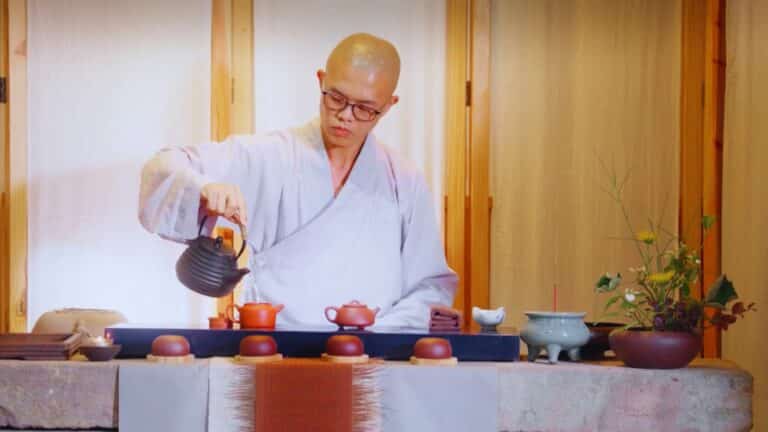
In the Wuyi Mountains, Buddhist monks still practice the Zen Tea Ceremony, a ritual of calm and tranquility through tea. TEA: The Drink That Changed The World filmed it at the Mother Tree Temple, home of the Da Hong Pao mother trees and the birthplace of Gong Fu Cha.
Watch: Mindfulness in a Cup
Three Mouths, One Cup
品, the Chinese word for tasting, is written with three mouths (口). In the film, the three mouths are three tea lovers tasting together. When the tea is superior, no one needs to speak.
TEA HISTORIAN BRUCE RICHARDSON
Speaking the Language of Tea
We don't have to speak the language. Because we are speaking the language of tea.
— Bruce Richardson, Tea Master, Boston Tea Party Ships & Museum · in TEA: The Drink That Changed The World
Chinese tea tasting needs no translation. One shared pot connects strangers at the table.
Lu Tong's Seven Bowls of Tea
Around 1,200 years ago, the Tang poet Lu Tong (790–835) wrote "The Seven Bowls of Tea" (七碗茶歌) while tasting tea. Legend has it that he was tasting Wuyi Rock tea, renowned for its long-lasting brews.
7 Cups
The first cup moistens my lips and throat;
The second cup breaks my loneliness;
The third cup searches my barren entrails but to find therein some five thousand scrolls;
The fourth cup raises a slight perspiration, and all life’s inequities pass out through my pores;
The fifth cup purifies my flesh and bones;
The sixth cup calls me to the immortals;
The seventh cup could not be drunk, only the breath of the cool breeze raises in my sleeves.
- Lu Tong (790-835 A.D.)
CHINESE TEA TASTING
Chinese Tea Tasting in Pictures
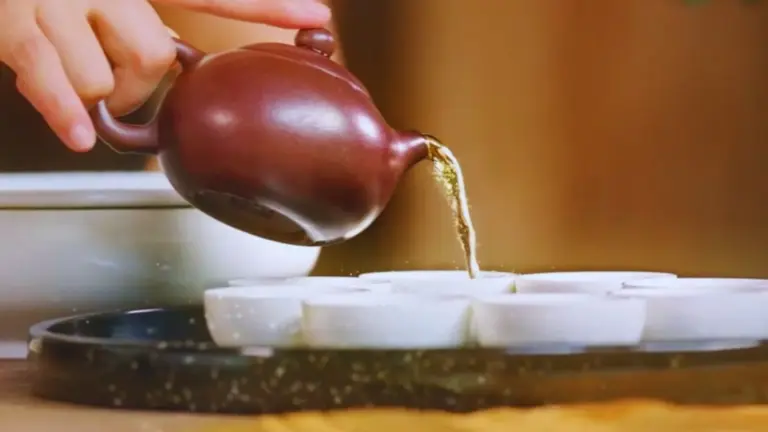
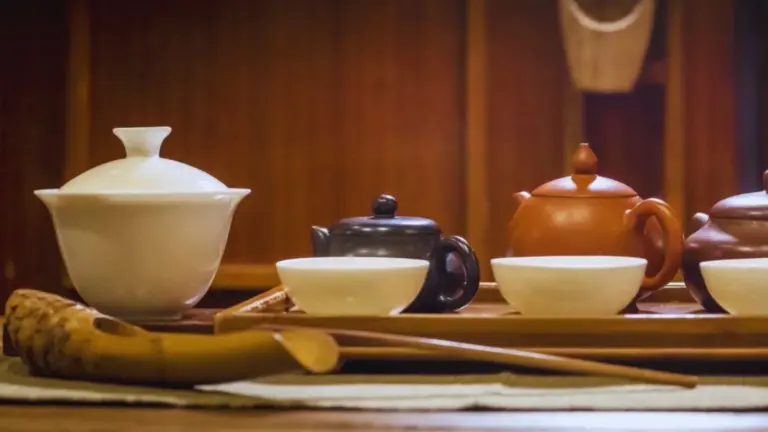
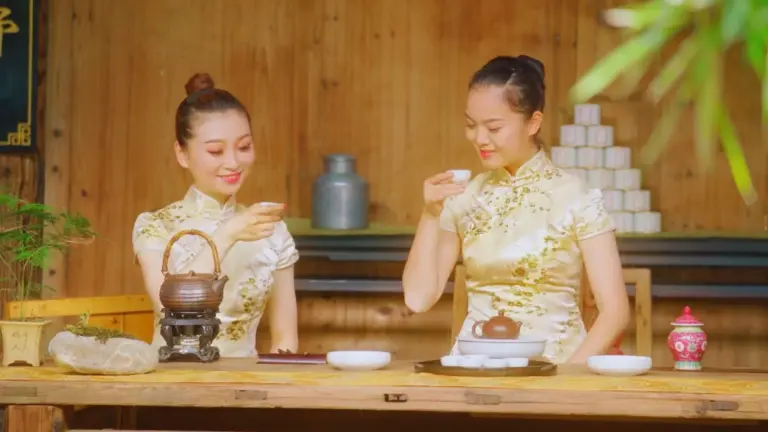
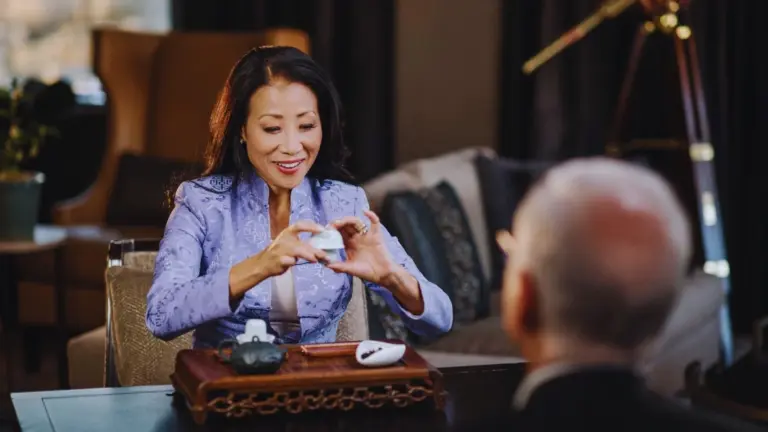
From the Wuyi Mountains to the Garden Tea Experience, these images show Chinese tea tasting as it is still practiced today: one pot, many cups and a shared table.
Watch: Official Trailer
Chinese Tea Tasting Frequently Asked Questions
Chinese tea tasting, answered: what it is, why the word for tasting has three mouths, how Gong Fu Cha works, and which tea to taste.
What is Chinese tea tasting?
Chinese tea tasting is the art of savoring tea with all the senses: sight, smell, taste and touch.
Its classic form is Gong Fu Cha, created by Buddhist monks in China's Wuyi Mountains to taste Oolong. Tea masters roll the tea on the tongue to judge its grade, fragrance, texture, strengths and weaknesses.
Discover the art of Chinese tea tasting in the documentary, TEA: The Drink That Changed The World. Watch free at teadocumentary.com/watch, or stream ad-free on Amazon.
Why does the Chinese word for tasting have three mouths?
品 (pǐn), the Chinese word for tasting, is written with three mouths (口), stacked one over two.
In the film, Master Huang explains that the three mouths are three tea lovers tasting together. When the tea is superior, they simply smile and nod. Tea tradition adds a second reading: taste each cup in three sips.
Explore Chinese tea tasting with the masters of the Wuyi Mountains in the documentary, TEA: The Drink That Changed The World. Watch free at teadocumentary.com/watch, or stream ad-free on Amazon.
What is Gong Fu Cha?
Gong Fu Cha (功夫茶) is the Chinese tea ceremony for brewing and tasting Oolong tea with skill.
"Gong fu" means skill gained through practice. The host brews many short infusions in a small teapot and pours a little for each guest. Every step honors two things: the guests and the tea.
Experience Gong Fu Cha at its source in the documentary, TEA: The Drink That Changed The World. Watch free at teadocumentary.com/watch, or stream ad-free on Amazon.
What are the steps of Gong Fu Cha?
The 8 steps of Gong Fu Cha are: light the incense, show the leaves, warm the teapot and cups, add the leaves, awaken them, pour from high, rinse the cups, and pour in a circle.
The steps have poetic names, such as "Black Dragons Enter the Palace" and "High Mountain Flowing Water." They can vary with local custom.
Watch the 8 steps of Chinese tea tasting unfold in the documentary, TEA: The Drink That Changed The World. Watch free at teadocumentary.com/watch, or stream ad-free on Amazon.
Where did Gong Fu Cha begin?
Gong Fu Cha began in China's Wuyi Mountains, where Buddhist monks created it to taste Oolong tea.
The film shows it at the Mother Tree Temple, home of the Da Hong Pao mother trees. Later, tea lovers in Chaozhou wrote down longer versions of 18 or more steps, and the ceremony spread across China.
Journey to the birthplace of Chinese tea tasting in the documentary, TEA: The Drink That Changed The World. Watch free at teadocumentary.com/watch, or stream ad-free on Amazon.
Which tea is best for Chinese tea tasting?
Oolong is the classic tea for Chinese tea tasting, especially Wuyi Rock tea such as Da Hong Pao.
Gong Fu Cha was created to taste it. Wuyi tea is known for a quality called "Rock Bone Floral Fragrance." Its many short brews let each cup reveal a new layer of flavor and fragrance.
Taste the legend of Da Hong Pao and Chinese tea tasting in the documentary, TEA: The Drink That Changed The World. Watch free at teadocumentary.com/watch, or stream ad-free on Amazon.
Why is the first brew poured away in Gong Fu Cha?
In Gong Fu Cha, the first brew awakens and rinses the tea leaves, so it is poured away rather than served.
The step is called "Black Dragons Enter the Sea." The leaves open up and the second brew tastes fuller. The film jokes that the first brew is "for your 'enemy,' of course."
Savor the wit and wisdom of Gong Fu Cha in the documentary, TEA: The Drink That Changed The World. Watch free at teadocumentary.com/watch, or stream ad-free on Amazon.
What is Lu Tong's "Seven Bowls of Tea"?
"The Seven Bowls of Tea" (七碗茶歌) is a famous poem by the Tang Dynasty poet Lu Tong (790–835).
It follows a tea drinker bowl by bowl, from moistened lips to a lifted spirit. By the seventh bowl, he feels a cool breeze under his arms, as if he could fly to the immortals. Legend says he drank Wuyi Rock tea.
Uncover the poetry of Chinese tea tasting in the documentary, TEA: The Drink That Changed The World. Watch free at teadocumentary.com/watch, or stream ad-free on Amazon.