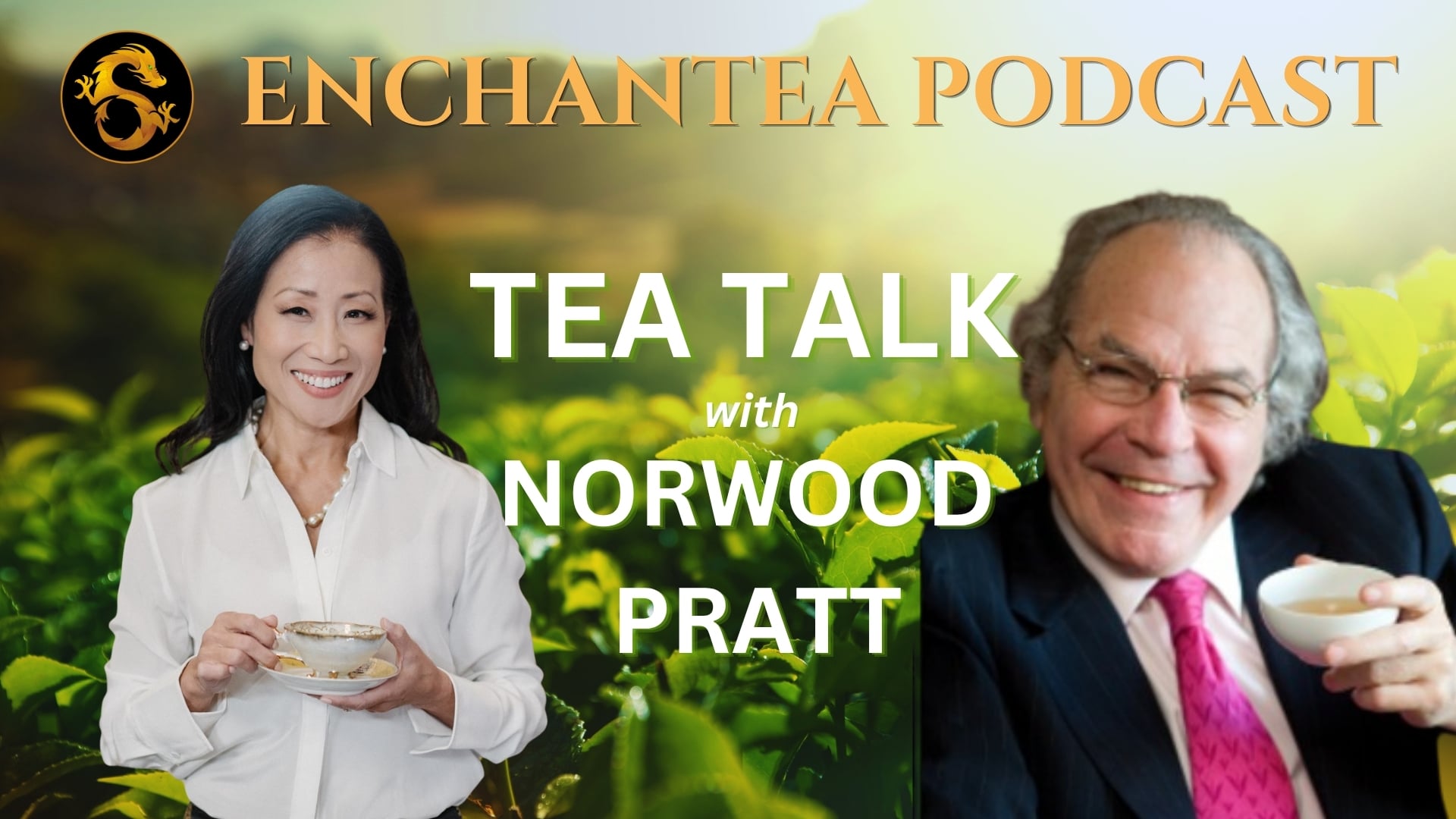
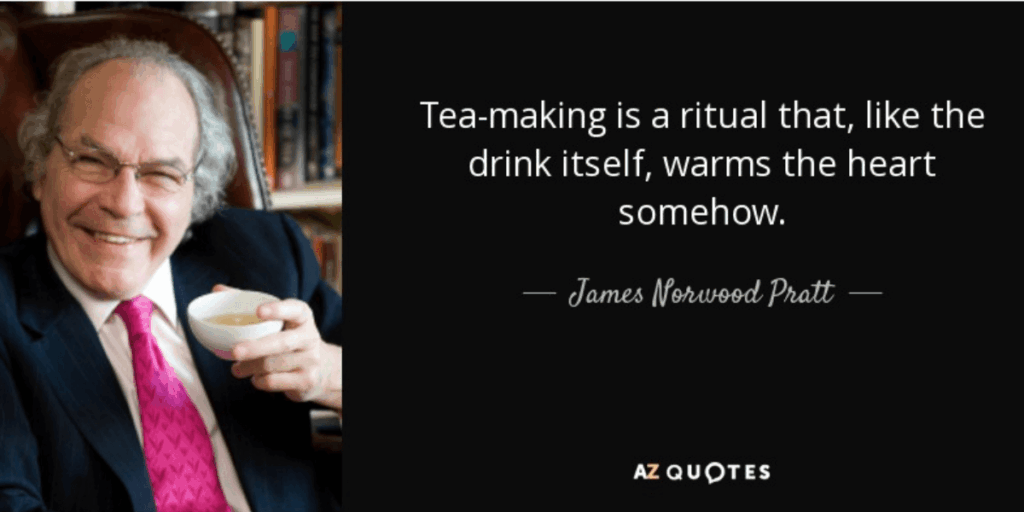
China calls him the American Tea Sage. His name appears in the introduction to the Classic of Tea in the Library of Chinese Classics.
“That’s like being knighted, don’t you think?” he says.
James Norwood Pratt wrote The Tea Lover’s Treasury in 1982 — the first book in English in over fifty years to take tea as seriously as wine writers took wine. He spent the decade before it writing about wine, trained by California’s finest winemakers. Then someone in San Francisco’s Chinatown handed him a cup of oolong.
When he started, American tea was a one-billion-dollar business. Today it is fourteen billion.
This is his account of the four decades in between — the ancestor who renounced tea as a pernicious custom, the teahouse he walked into a day before it opened, and the one tea he calls his perfect cup.
IN THIS EPISODE, YOU’LL DISCOVER
- ◆Why The Tea Lover’s Treasury was the first English book in fifty years to treat tea like fine wine
- ◆How his wine training with California’s best made him ready for something subtler than wine
- ◆Heaven, earth, and man — and the fuller Chinese formulation, 天时地利人和, that shapes every cup
- ◆His ancestor Penelope Barker, the Edenton teapot, and tea that tasted pernicious
- ◆The day he pushed open a locked door and met Roy Fong — and never left
- ◆The 1980 letter to a tiny Connecticut company that began the Harney friendship
- ◆Why America is just emerging from its first dynasty
- ◆Lushan Yun Wu (庐山云雾) — Mount Lu’s Cloudy Mist, his perfect summer cup, and why almost no one in America can get it
Story Highlights
| Time | Topic |
|---|---|
| 0:00 | Welcome — the American Tea Sage |
| 0:37 | Named in the Classic of Tea |
| 1:20 | The Tea Dictionary |
| 1:49 | 1982: The Tea Lover’s Treasury |
| 2:46 | $1 Billion to $14 Billion |
| 3:49 | Mrs. Barker and the Pernicious Custom |
| 6:21 | America’s First Dynasty |
| 7:22 | A Friend to All the Friends of Tea |
| 8:00 | From Wine to Tea |
| 8:33 | The Subtlest Thing Our Tongues Can Detect |
| 9:02 | Heaven, Earth, and Man |
| 11:28 | Why the Book Could Only Have Been Written in San Francisco |
| 15:11 | The Yans of Wuyi |
| 17:48 | Pushing Open Roy Fong’s Door |
| 20:19 | A Letter to Sarum Tea, 1980 |
| 25:50 | Tea Is a Calling |
| 26:51 | Tea Chooses You |
| 37:24 | The Pure Leaf |
| 58:26 | Theanine Before Caffeine |
| 59:57 | American-Grown: Mississippi Tea Company |
| 1:01:29 | Since the Pyramids Were Under Construction |
| 1:04:11 | The Perfect Cup: Lushan Yun Wu |
| 1:07:03 | Tea Is a Friend |
About James Norwood Pratt
James Norwood Pratt is the author of The Tea Lover’s Treasury (1982) and The New Tea Lover’s Treasury, along with the Tea Dictionary — which he notes was the first English-language book on tea to print the Chinese names alongside the English.
China named him the American Tea Sage, and his name appears in the introduction to the Classic of Tea in the Library of Chinese Classics. He served as a Contributing Editor at TeaTime magazine before his retirement, a role Bruce Richardson now holds.
Before tea there was wine. He wrote about it for roughly ten years in San Francisco, trained by California’s finest winemakers — and he credits that training with preparing him for a subject he considers considerably harder to taste.
JAMES NORWOOD PRATT’S CONTRIBUTION TO TEA
- ◆The Tea Lover’s Treasury (1982) — the first book in English in over fifty years to take tea as seriously as wine
- ◆The New Tea Lover’s Treasury — the revised edition, available with an audiobook
- ◆Tea Dictionary — the first English-language tea book to print the Chinese names
- ◆The American Tea Sage — named by China, and cited in the introduction to the Classic of Tea (茶经), Library of Chinese Classics
- ◆Contributing Editor, TeaTime magazine — until his retirement
- ◆Four decades as tea’s literary voice in America — across a market that grew from $1 billion to $14 billion
“My role has been to be a friend to all the friends of tea. And I am a friend to any friend of tea anywhere in the world.”
— James Norwood Pratt
Mrs. Barker and the Pernicious Custom
Norwood’s early American ancestors included Penelope Barker, a prominent citizen of Edenton, North Carolina in the 1700s.
In October 1774, Barker and fifty other women signed a statement renouncing British tea and English cloth — and sent it to England. It is remembered as the Edenton Tea Party, and it stands as the first recorded organised political action by women in the American colonies. Norwood notes there were five or six others in the same period: Charleston, somewhere in New Jersey, New York.
What he loves is the wording. The Edenton women wrote to London announcing they had renounced the pernicious custom of drinking tea — a tea that was, as he puts it, only paying dues to the crown.
The teapot survived. It came down through the family and was disputed, he says, by all the cousins who would have it. He believes it went to his cousin Carol Hayes.
“Wherever it is, Mrs. Barker is there with it.”
And Norwood has drunk from it.
“I have brought tea made in Mrs. Barker’s teapot, and I thought it was better because it tasted pernicious.”
— James Norwood Pratt

America’s First Dynasty
Asked where America sits in tea’s story, Norwood reaches for a longer measure than most Americans would.
Tea is over five thousand years old. The United States is not yet four hundred. So far, he says, America has been a footnote.
“We are just now emerging from our first dynasty. And if this is the end of our first dynasty, and if we like China, we can look forward to 20 or 30 more.”
— James Norwood Pratt
It is a characteristically generous way to describe a young country — not behind, simply early.
From Wine to Tea
He arrived in San Francisco from North Carolina and spent about ten years writing about wine, trained by California’s finest winemakers in how to taste and, more importantly, in what makes something taste the way it does.
The Chinese framework fits both, he says: it all comes from heaven, earth, and man. Heaven is everything above the soil. Earth is everything below it. Man is the human factor.
The fuller Chinese formulation — the one used about tea and about farming — is 天时地利人和: heaven’s timing, earth’s advantage, and people’s harmony. These are the three vital elements, and Mencius ranked them. Heaven’s timing is not as good as earth’s advantage; earth’s advantage is not as good as people’s harmony.
Which is to say the leaf can have the perfect season and the perfect mountain and still come down to the last one. Good tea asks that the people making it be at peace with themselves, and with one another.
In the Wuyi Mountains, filming TEA: The Drink That Changed The World, an 11th-generation Oolong master known as Old Daddy Huang put the same idea in six words.
“To make good tea, one must have good morals.”
— Old Daddy Huang, 11th-generation Oolong tea master, Wuyi Mountains

Or, as he says it more plainly still: good people make good tea. A tea historian in San Francisco and a tea master on a Fujian cliff, arriving at the same conclusion from opposite ends of the earth.
Thus prepared by wine, he found himself able to enjoy something considerably more subtle.
“Tea is surely the subtlest thing our tongues can detect.”
— James Norwood Pratt
He extends the thought in a way worth sitting with: it is too much to say tea always has a taste. Sometimes it just has an effect on the palate. You have to become very sensitive to enjoy the very best teas.
And then he removes the barrier he has just built. You do not have to train as a taster in order to get the pleasure from it. He simply wanted to taste it as closely as he could — because of the line he is most quoted for.
“But pleasure is much too serious to take lightly.”
— James Norwood Pratt
Why the Book Could Only Have Been Written in San Francisco
When Norwood wrote The Tea Lover’s Treasury, America was not a tea-consuming society. It was not a wine-consuming society either when he wrote his first wine book. Both have changed.
The city made the book possible. San Francisco had the largest Chinatown anywhere, a Japantown, and people from every tea-growing part of the world within a few miles. It was, he says, the ideal place to learn about tea — and the only place that book could have been written.
One line from the book is the one Christy read back to him — a sentence, she said, only a person living in San Francisco could write.
“No pleasure is simpler, no luxury cheaper, no consciousness-altering substance more benign.”
— James Norwood Pratt, The Tea Lover’s Treasury
“Yes,” he said. “And I stand by that. I’ve tried a great many consciousness-altering substances — starting with Burgundy, though soon I hit the harder stuff, as Dylan said.”
Then the sentence he would not walk back: of all the things you can put in your body that will change your frame of mind, none is subtler, none simpler and gentler, than our favourite drink — tea.
Pushing Open Roy Fong’s Door
He had learned everything he could in Chinatown. Then he saw a sign with the character 茶 — cha, tea — on it.
It was, in Norwood’s words, the first traditional Chinese tea house ever to open in North America. He pushed the door open and was told they were not open yet — which was true. They would not open until the following day.
He entered anyway.
Inside were Roy Fong and his wife Grace, who became, in his words, his teachers and dear friends. They had the greatest teas of China, which he never expected to see available in this country.
Roy’s version, Norwood reports with evident pleasure, is that he came in anyway and then simply would not leave.
Roy is a Taoist priest. He had much to teach, Norwood was happy to learn — and it turned him around and made him a teacher too.
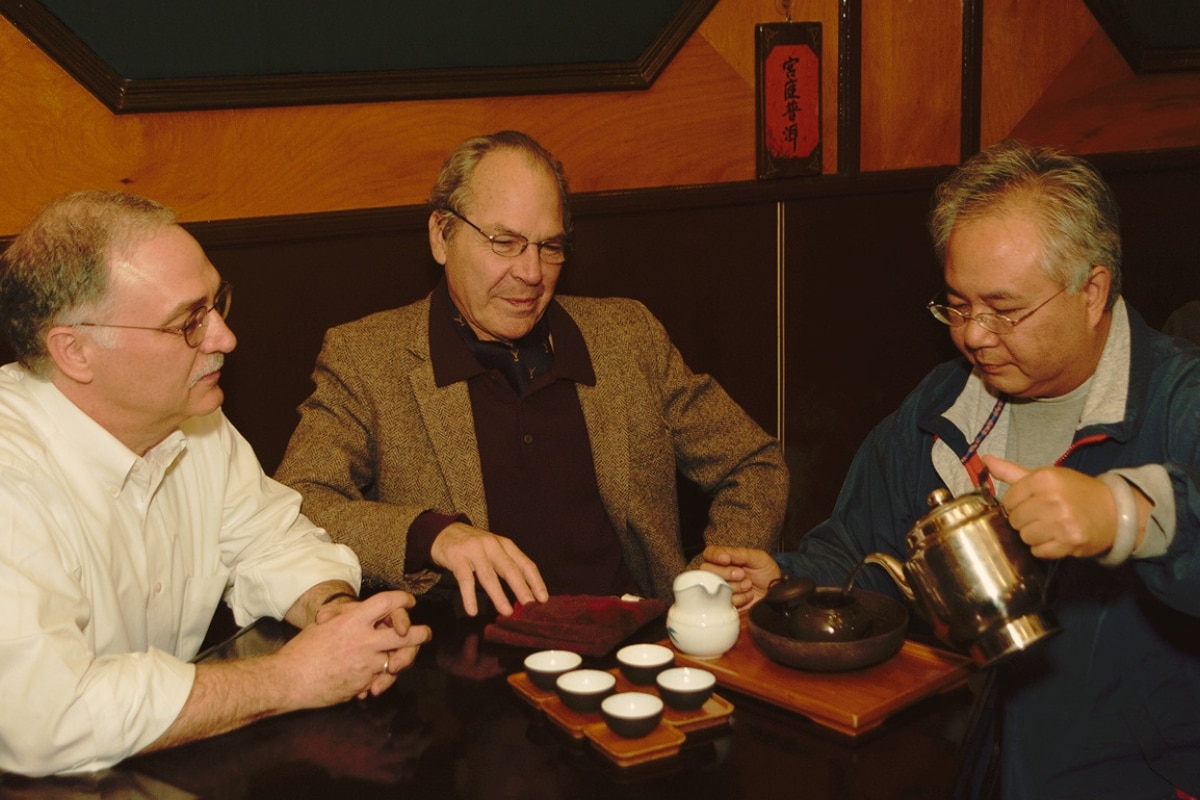
“I could go anywhere and say Roy Fong says — and of course I should know, because I spent hours at his elbow and we would taste teas together.”
It is worth noting how Roy tells the same shop’s story in his own episode: more carefully. “I like to claim that we’re probably the only authentic tea shop, Chinese tea shop, in the US at the time.” Two men, one room, four decades of friendship — and the guest is the one making the bigger claim.
A Letter to Sarum Tea, 1980
The Harney friendship began with a letter.
In 1980 Norwood wrote to the owners of Sarum Tea, a minuscule company he had discovered in Salisbury, Connecticut. The man who answered said he had just bought it — and that he did not know anything about tea.
That man was John Harney.
Four and a half decades later Norwood is still counting them: John, who discovered he had the calling. Mike Harney — now the company’s vice president and master tea buyer and blender — who has it in spades. And Elyse Harney, John’s wife, who built her own real-estate firm across Connecticut, the Hudson Valley, and the Berkshires while he built the tea company. Over ninety now, not slowing down, and in Norwood’s phrase the force of nature behind them all.
“There is no substitute for a Harney,” he says. “And when you combine several Harneys, you’ve got a force of nature.”
John Harney had taken over Sarum Teas that same year, after the death of his own mentor, Stanley Mason. Three years later, in 1983, he founded Harney & Sons from the basement of his Salisbury inn. He served as founder and president until his death in 2014. His sons Mike and Paul Harney carry the company on, with a third generation now part of the work.
Tea Chooses You
Ask Norwood what separates the people who last in tea from the people who pass through, and he does not describe a skill.
“Tea is a calling,” he says. “You have it. I have it.” John Harney discovered he had it. Mike Harney has it in spades. Bruce Richardson has it. Roy Fong has it.
“You don’t decide that you’re gonna do tea. Tea decides you’re gonna do it. Tea chooses you.”
There is really no other explanation, he says, for the people who entered that world — or for why the others did not.
He applies the same generosity to how people drink it. He is not going to drink boba tea; he is interested in the pure leaf and what it has to tell him. But he encourages everyone else to do as they like. They can bathe in it, as far as he is concerned — as long as they buy it and support his friends in China and India who grow it and make it.
Since the Pyramids Were Under Construction
For anyone just beginning, his answer is disarmingly plain: it will make you feel good, and you will like the way it makes you feel.
That, he argues, is the whole reason tea has a five-thousand-year history.
“Drinking tea is something people have gotten together to do since the pyramids were under construction.”
— James Norwood Pratt
Five thousand years ago is roughly when the Chinese forefathers of the Taoists were up in the mountains trying every leaf they could find. His imagined version of their conclusion: this one doesn’t taste too good, but it makes you feel good.
It took them a couple of thousand years to get the taste where they wanted it. They did not stop trying.
He also notes something modern research bears out — the theanine in tea, which soothes the nervous system, is the first thing you feel. It arrives before the caffeine does.
American-Grown Tea
Now that tea has taken root here, Norwood expects America to become not just a tea-consuming country but a tea-producing one. On a very small scale, he is careful to add.
He knows several dozen people growing tea for their own interest, most with no plan to sell it. But some are making genuinely creditable tea, and they are good farmers.
His recommendation is specific: Jason McDonald and the Mississippi Tea Company. If you have never tried their Black Magnolia, he says, let him recommend it — a very respectable, enjoyable American-grown black tea.
From Brookhaven, Mississippi, my dear. You ain’t gonna beat that.
The Perfect Cup: Lushan Yun Wu
Asked to steep one cup that would represent his life in tea, Norwood says it would depend on the season. For summer, he names Lushan Yun Wu — 庐山云雾, cloudy mist.
It is a Chinese green tea from Mount Lu (庐山 Lushan) in Jiangxi Province (江西), near the Yangtze. The mountain sits under near-permanent mist, which shades the tea plants from direct sunlight — nature doing what Japanese growers build tarps to achieve. The result is smooth and sweet, with a delicacy Norwood says you would never forget.
It was grown by monks originally, he says: a very limited area of production with the perfect climate for that particular cultivar, and the perfect devotion from those particular tea-growing monks. The record agrees — Mount Lu’s tea was first gathered wild and later cultivated by Buddhist monks.
It is one of the smallest productions of China tea, and probably very hard to find in America.
“I’ve only had it through Roy Fong. And I’m not sure Roy can still get it — but we sure got it, and we sure have never forgotten.”
The circle closes there. Roy Fong handed him his first cup of oolong in a Chinatown shop that had not yet opened. Four decades later, the one tea Norwood names as his perfect cup is still a tea only Roy could get him.
He adds a piece of tea history worth keeping: all of the earliest Chinese teas we have names for come from mountains with Buddhist monasteries, mostly starting in Sichuan (四川) and spreading outward. It took centuries for tea farming to reach the coast from the interior — and the growers were pioneering the whole way, learning which cultivar disliked which weather and which soil. By the time they had been prospecting for centuries, they knew exactly where to grow tea.
Tea Is a Friend
The last question asked what tea means to him. He answered in one breath.
“Tea is a calling and you’re very lucky if you hear the call. And tea is a friend. And it will do all the things we’ve said. If you are overheated, it’ll cool you, and if you’re too chilly, it’ll warm you. And if you’re too excited, it’ll cool you off. And if you’re phlegmatic and unenergized, it’ll pep you up. It’ll be hard to find a better friend than that.”
— James Norwood Pratt
Earlier in the conversation he had made a smaller claim for it, and perhaps a truer one. Tea does wonderful things for those who love it.
“It makes people happier, I think. I think it makes them healthier. And I know that it makes them a lot less quarrelsome. We get along over a pot of tea.”
— James Norwood Pratt
In a way, he adds, that other drinks might make more difficult.

Full Transcript
Read the Full Transcript
00:00:10 Christy Hui:
Today I am thrilled to share this cup of tea with my good friend, my tea friend. Norwood Pratt, who actually is called by the Chinese, the American Tea Sage. Now coming from the birthplace of Tea China itself, it’s quite an honor, isn’t it? Norwood?
00:00:37 James Norwood Pratt:
How did you know that, that occurred? I’m so proud to be mentioned in the introduction to the classic of tea in the library of Chinese classics. That’s like being knighted, don’t you think?
00:00:52 Christy Hui:
Yes, is indeed. Because when I picked up another piece of giant work of yours besides this lovely book of tea lovers, Treasury, which by the way. It’s a fascinating book and well done. And also I have the pleasure of reading your second book, which is your dictionary, tea dictionary. Oh yeah. With Chinese and English. And I thought to myself, oh my, and this is before I knew that you were crowned the American Tea Sage. And I thought that was a well deserved title because you had incorporated the Chinese name in to this tea dictionary.
00:01:40 James Norwood Pratt:
That was the first time in an English language book on Tea. The chinese name was in print there.
00:01:49 Christy Hui:
I love it. So since your ground breaking book, the Tea Lovers Treasury, first Enchanted the Tea World in 1982, you have been tea’s literary voice and reviving America’s tea consciousness and transforming how the American continent, thinks about this divine beverage. So for over four decades, Norwood has witnessed and guided Americans tea renaissance from its infancy to its remarkable growth. When you started, it was $1 billion in annual sales. In America. Today it is 14 billion. That’s 14 times. Over the span of 40 years, Norwood.
00:02:46 James Norwood Pratt:
Now? That looks like our tea friends. And we have made some progress in this country.
00:02:53 Christy Hui:
Indeed. Just a little bit of progress. 14 times, little bit over 14 times. You’ve done a marvelous job, my friend, along with many tea experts, I am. Sure. And this is why we are having a call today and for you to share your amazing tea stories along this journey. People whom you inspired and they inspire you and made an impact in your tea journey and the American tea industry. I wanna start with your brilliant book. And by the way, your tea brother Bruce Richardson loved your book. And he says that he used to study it all the time when he first started his Tea Journey. And like I said, you had me at the prologue. Can you paint the picture for me just a little bit about Mrs. Barker and her old teapot, and her pernicious custom of drinking tea?
00:03:59 James Norwood Pratt:
I certainly can tell you my early American ancestors included Penelope Barker, who was a prominent citizen in the 1700s, a prominent citizen of Edenton, North Carolina. And. She and her friends got together to declare that they would do without tea. This was part of the lead up to the American Revolution, and it was the Edenton Tea Party it preceded before the Boston Tea Party, and there were five or six others, Charleston, South Carolina, somewhere in New Jersey, and New York other places had, people were renouncing tea. And Penelope Barker and her prominent social friends sent a letter to the London Times announcing that they wanted all their friends in London to realize that they had renounced the pernicious custom. It was questioned by some doctors if tea was good for you. So that pernicious custom of drinking tea, which was only paying dues to the crown, was no longer gonna be tolerated in Edenton. That’s what they said. And that pot came down in the family and was disputed by all the cousins who would have it. But I have brought tea made in Mrs. Barker’s teapot, and it, I thought it was better because it tasted pernicious.
00:05:46 Christy Hui:
I love that line by the way. I giggled when I thought, oh my gosh, what a great writer. I loved it. Those are the Daughters of Liberty, isn’t it?
00:05:59 James Norwood Pratt:
That’s right. And it was widespread amongst the British colonies here, colonies and of course I had some ancestors involved.
00:06:09 Christy Hui:
I love that tea has such an impact and deep history, the roots in our families. And now did you get that teapot? Did it come to you?
00:06:21 James Norwood Pratt:
It did not. I think it went to my cousin Carol Hayes after much discussion, by the way, amongst the first cousins. But. Wherever it is, Mrs. Barker is there with it. So far America has been a footnote in the story of tea, which is over 5,000 years old and as a country we’re not yet 400 years old, but after all, we are just now emerging from our first dynasty. And if this is the end of our first dynasty and if we like China, we can look forward to 20 or 30 more.
00:06:59 Christy Hui:
Exactly. Thanks to Americans Tea Sage like you and all the wonderful friends that you have in the Tea Community America is now contributing to about 18%, almost 20% of the tea consumptions in the world. So I said that we’ve done well, my friend.
00:07:22 James Norwood Pratt:
My role has been to be a friend to all the friends of Tea. And I am a friend to any friend of tea anywhere in the world. And we have a language in common, which of course is tea. And it does wonderful things for those who love it. It makes people happier, I think. I think it makes them healthier. And I know that it makes them a lot less quarrelsome. We get along over. Pot of tea, we
00:07:54 Christy Hui:
get along,
00:07:55 James Norwood Pratt:
In a way that, in a way that other drinks might make it more difficult to get along,
00:08:01 Christy Hui:
which I love. Which I love this line that you wrote. You very famously said, pleasure is far too serious to take lightly. And you’ve described your transition from wine to tea as moving from the sacrifice of sobriety.
00:08:22 James Norwood Pratt:
Yes.
00:08:23 Christy Hui:
Now, how did this shift shape your philosophy about life’s pleasure and ultimately lead you to become the American Tea sage?
00:08:33 James Norwood Pratt:
I had the perfect training. I was first of all addicted to wine, and I had the training from California’s finest wine makers and how to taste. And what made it taste like that? It’s, as the Chinese would say with grapes as well as with tea. It all comes from heaven, earth. And man heaven is everything above the layer of the soil. Yeah. Earth is everything below it. And man is the human factor, right? And so with thus prepared by wine I was able to start enjoying something that is much more subtle than wine. Tea is surely the subtlest thing. Our tongues can detect. It is too much to say. tea always has a taste. Sometimes it just has an effect on the palate. And so you have to become very sensitive in order to really enjoy the very best teas. And this is not to say that other people are excluded from enjoying tea. You don’t have to train as a taster in order to get the pleasure from it. But pleasure is much too serious to take lightly. And so I’d like to taste it as closely as I could. And that’s why I was interested in the plant itself, what it has to say, wherever it comes from, that’s tasting.
00:10:08 Christy Hui:
I love that because in a Chinese philosophy and as you so poignantly, described the three elements. It is the heaven, the earth, and humanity and all in harmony. And I love that. And it is tea to the tea because that’s how tea is made from heaven. The best thing in heaven and the best thing on earth. The Terroir and made by good people.
00:10:46 James Norwood Pratt:
That’s right. And so I had the great advantage. Moving from my birthplace North Carolina to San Francisco. And that was the only place where that book on tea could have been written. We had everybody there in the city, San Francisco. of course, we had the largest China town anywhere else. We had a Japan town. We had more Indians than you could count. We had people from all over the world, and so to learn that was the ideal place to learn about tea. And that book that you’re holding in your hands was the first book? Yeah. The previous edition. It was the first book in English that takes tea seriously. The way people have been writing about wine. Wine, the first book in over 50 years in English. It could only have been done in San Francisco.
00:11:47 Christy Hui:
That was the golden age of San Francisco.
00:11:49 James Norwood Pratt:
It’s certainly was one of the leading golden age.
00:11:52 Christy Hui:
Yes.
00:11:52 James Norwood Pratt:
And I have to say that to have that opportunity opened me and everybody who read me and to a world that, that had been closed to this country and we had not become, when I wrote my first book about wine, we had not become a wine consuming society. Now we are we Americans. We were not a tea consuming society either, Christy,. And
00:12:20 Christy Hui:
now we are.
00:12:21 James Norwood Pratt:
And now we are well on our way, aren’t we?
00:12:25 Christy Hui:
Uhhuh? 83% of Americans now drink tea. So you’ve done well, my friend. We’re not alone. Yeah, we’re not alone. And I love how you described this and I agree with you that only a person living in San Francisco can describe like this. I love it. It says, no pleasure is simpler, no luxury, cheaper, no consciousness altering substance, more benign. That’s how you described tea. I loved it.
00:12:57 James Norwood Pratt:
Yes. It, I, and I stand by that. I tried a great, many consciousness altering substances. Starting with Burgundy though soon I, hit the harder stuff as Dylan said. But of all of the things you can put in your body that will change your frame of mind. None is subtler and none simpler and gentler than our favorite drink tea.
00:13:27 Christy Hui:
I love it. And there’s another line that I love and I’m still in the prologue by the way. You said that one puzzling thing tea can teach us is how stories and legends affect the taste of things. I find it completely true. And so that’s why when I was doing my tea documentary, when I discovered the legend of the stream of the nine windings. And it was the nine dragons, the nest of nine. Nine Dragons. Yes. It immediately, it just elevated everything I did and it had a lot of impact on me on the storytelling.
00:14:14 James Norwood Pratt:
Yes. I have floated down that stream and I had a Chinese comrade who could decipher the characters engraved in the stones. On the cliffs. Alongside the stream. And people have been doing just what you did, just what I did for thousands of years. And the tea is growing on the slopes on either side of the stream. And you can almost imagine what it tastes like as you float past.
00:14:45 Christy Hui:
Now what captured your imagination the most when you were traveling through Wuyi Mountains?
00:14:53 James Norwood Pratt:
Now what captured it the most were the Yans A Yan. You see the tea from Wuyi at its best is Yan Cha.
00:15:05 Christy Hui:
Yes, Yan Cha
00:15:07 James Norwood Pratt:
that’s right. That, that, yes..
00:15:09 Christy Hui:
The Rock Terroir.
00:15:10 James Norwood Pratt:
The Cliff Tea.
00:15:11 Christy Hui:
Yes.
00:15:11 James Norwood Pratt:
Cliff Tea. Yes. Now, when I woke up in Wuyi with my Chinese tea teacher and Roy Fong, oh, you stepped out in the Dawn Light and he said. See that rock? And I said, and obviously you couldn’t miss it. He said, that is a yan. And of course, the yans of Wuyi look the way Walt Disney would’ve pictured China.
00:15:40 Christy Hui:
It’s truly mystical and fantastical.
00:15:44 James Norwood Pratt:
Yes. Stones Yes. That are covered with tea plants. A lot of them.
00:15:48 Christy Hui:
Yes.
00:15:49 James Norwood Pratt:
And they have, and tea plants that have evolved. There are the best ones for Oolong..
00:15:56 Christy Hui:
Yes.
00:15:58 James Norwood Pratt:
You know these things. And so there must be, oh, 18 or 20 different varietals of tea that are growing in Wuyi Mountains on these different yans yes. And each varietal has its own peculiarities, its own look as a plant, its own taste as a drink. And of course we all love Wuyi, tea and there are no better Oolongs to be found on the planet. And you can imagine thrill for me to be there also with my teacher who had opened to me the whole universe of China tea. The homeland of tea. I was, and I was privileged to meet him the day before he opened Imperial Tea Court. And he said, we’re not open. Didn’t say, go away. So I went right in.
00:16:58 Christy Hui:
That’s a tea person for you didn’t say go
00:17:00 James Norwood Pratt:
away. That’s right. He had a sign out front that said Cha. So I knew there was tea in there.
00:17:07 Christy Hui:
Now have you written the book then?
00:17:10 James Norwood Pratt:
I had already written my first tea book. But of course China tea had been illegal. They were, I won’t say illegal, but Nixon had not visited Mount Stong and they were at standstill. And so we had no access to the great China tea outside of San Francisco’s Chinatown.
00:17:35 Christy Hui:
Ah, of course
00:17:37 James Norwood Pratt:
I had learned everything I could in Chinatown. And then finally here is this sign cha. Here. Here, read it.
00:17:48 Christy Hui:
Right
00:17:48 James Norwood Pratt:
here is I discover here is the first traditional Chinese tea house ever to open in North America. Wow. And I pushed the door open to be told. We’re not open yet. It’s true. They didn’t open till the following day, but I entered anyway. And here. Roy Fong and his wife Grace, who became my teachers and dear friends, had the greatest teas of China, which I never expected to see available in this country. Yeah. So Roy said he came in anyway and then he just wouldn’t leave. And indeed I wouldn’t leave. There was no better opportunity to find to learn about China tea from after all. Roy is a Taoist priest,
00:18:40 Christy Hui:
correct? Yes.
00:18:41 James Norwood Pratt:
And so he had much to teach and I would be happy to learn and that turned me around and made me a teacher too. I could go anywhere and say Roy Fong says and of course I should know because I spent hours at his elbow and we would taste teas together.
00:19:03 Christy Hui:
Roy truly is a legendary figure in Chinese tea in America. He truly,
00:19:13 James Norwood Pratt:
that’s right, in a
00:19:14 Christy Hui:
time when we didn’t have, access to Chinese tea. Roy was the frontier and the pioneer.
00:19:21 James Norwood Pratt:
That’s right. And so then given what Roy had, what I had learned from Roy I was able to spread the word further and further. And now if you look for it you can find plenty of China tea and if you’ve got the right friends, you can find excellent China tea. Exactly. I might mention Roy Fong, I might mention Jason Chin. I might mention I might mention fellow round Eyes like Mike
00:19:51 Christy Hui:
Hart, your round eye. Yes. I tasted Roy’s Pu-erh tea. It is out of this world.
00:19:58 James Norwood Pratt:
Yes.
00:19:59 Christy Hui:
And spectacular. Now let’s talk about another favorite friend, tea friend of yours that you helped in the early days, the Harney’s. Tell me about those amazing pioneering days of the Harney’s.
00:20:19 James Norwood Pratt:
That’s a story that’s continuing today because we are dear friends and in regular contact. In fact, just today FedEx picked up and carried the last of my tea library which I’m donating to Michael Harney, for him to find a good home for it. Oh, wow. And so here is a collection of books on tea, not all of them in English which has found a good home. And that’s how it’s been with the Harney clan and myself since 1980 when I wrote a letter to the owners of Sarum Tea in this minuscule company that I had discovered in Salisbury, Connecticut. And the guy who answered the letter said, I just bought this company. And basically. I don’t know anything about t Do you, can you tell me anything
00:21:25 Christy Hui:
now? Was it an inn then? Did he start it as an inn?
00:21:30 James Norwood Pratt:
This was the beginning of the friendship between John Harney and me. He is the man who had just bought serum tea and had not yet renamed it Harney fine teas. And so he and I had a lot to talk about. And after a while. We were collaborating in every way we could think I did. And I think I wrote everything that was ever published as Harney tees.
00:22:01 Christy Hui:
My goodness.
00:22:03 James Norwood Pratt:
Yeah. And for some years there, because I was after all a writer and John didn’t have the gift, so you know, what was needed. Labels and news and things like that. Anyway, later on, John said to me, i’m having this we call it a tea site and I want you to please come and the people at John’s living room, it was a gaggle of journalists and the editor of Town and Country Magazine and others perhaps distinguished than she, but still a good representative selection and myself, along with Bruce Richardson and Jane Pettigrew from Oh
00:22:53 Christy Hui:
wow. Okay.
00:22:54 James Norwood Pratt:
And so we were the principal speakers. There was a guy from the Maritime Academy Dr. Robert Gardella, who was an expert on Chinese tea exports in the 18 hundreds which taught me a whole lot. I don’t know if the journalists were taking notes, but I was, anyway that was the first tea summit and it was the time when Robert when Bruce and Jane and I first met face to face along with John Harney, and that really started something,
00:23:32 Christy Hui:
my goodness. What year was that?
00:23:34 James Norwood Pratt:
That would’ve been 1993. Okay. So John and I had been in contact for at least 10 years at that time, and later on John said, I’m changing the name to Harney and Sons Fund. Oh my goodness. And I said, but John and your sons aren’t in the business with me. John was a man of faith. He said, just wait. And sure enough, it wasn’t that long before I was introduced to Mike Harney and then his brother Paul and we, our stalwart friends from that hour. And so anyway we’ve done a, we’ve had a good many adventures together and saw each other at every opportunity. And John was an indefatigable ambassador for tea. And so we made a pretty good pair, I think.
00:24:37 Christy Hui:
And from that humble beginning to now an American tea company doing tea business worldwide. That’s right. With 250 employees beyond his sons and 250 employees.
00:24:53 James Norwood Pratt:
Oh yeah. Oh, absolutely. Absolutely. That is this one of our great American success stories, not just Yes. A key success stories. Yes.
00:25:01 Christy Hui:
American great success stories.
00:25:03 James Norwood Pratt:
And it is, one of, it is one of, I won’t say many, but a good many that we have today that we didn’t have when our tea renaissance began.
00:25:15 Christy Hui:
Yes. Now, what do you think Norwood is the magic ingredient that, as you say, made that as a startup? An entrepreneur? Literally just a believer. He didn’t even know about tea. But it was an entrepreneur. Decided to make a go of it, and then now it’s a global business. And this is beyond tea. You are right. It is an entrepreneurial American spirit. What do you think is the magical ingredients that helped make it happen?
00:25:50 James Norwood Pratt:
There is no substitute for a harney. And when you combine several harney’s, you’ve got a force of nature and the force of nature behind them all was John’s wife, Elise Harney, Hey, my very dear friend who’s over 90 now and not slowing down anyway Elise, like me, has seen it from the first. And besides, besides the natural ability of these charming and very enterprising people in the Harney family. Tea Christy is a calling. It’s a calling. You have it I have it, yeah. John Harney discovered he had it. Yeah. Mike Harney has it in spades. And most of our tea friends, Bruce Richardson, for example. Yes. And most of the others we could name
00:26:50 Christy Hui:
Roy Fong. Yes,
00:26:51 James Norwood Pratt:
absolutely. And so you don’t decide that you’re gonna do tea. Tea decides you’re gonna do it Tea chooses you, and there’s really no other explanation for those who have entered it, entered that world. And why didn’t the others? They didn’t have the calling now. Now, if you have the calling then somehow or other you are led, one thing you discover is. That in the world of tea, you don’t have competitors, you have colleagues. Yes. There is always a trade. You were saying I can let you have some of my Gong Cha, but I, hey I, look, I’ve only got 10 kilos and Valerie and I are gonna drink one of those and that means well, I can let you have, so thus you’re dealing all the time. We can share. Yes and, you respect and there’s friendly rivalry of course. But but it is a collegial and friendly environment, not a competitive cutthroat one.
00:28:03 Christy Hui:
I think that’s why I felt. The Kindred spirit with you, when you use the word tea Brother with Bruce Richardson. I’m your tea sister and you’re my tea brother.
00:28:20 James Norwood Pratt:
That’s right. And one of my dear tea sisters is Marion Deion who like John Harney somebody I’d never heard of, who calls up from out of the blue and says I hear you can tell me a thing about something about tea and what do you charge? You don’t charge. You come over and have tea. And we would talk about it and see what I can do to help you. And and so anyway Marianne who is French said her real ambition was to grow tea in France. Do you know that right now she and her husband Alex have several acres of tea growing in the Pyrenees Mountains right down on the Spanish border, and they’re gonna make good green tea down there.
00:29:15 Christy Hui:
Oh, that, that Terroir. I’ve been to the Pyrenees Mountains.
00:29:19 James Norwood Pratt:
That’s right. And we were just praying for enough suns this year. And she is in love with, she’s in love with matcha. Yes. The ground Yes. That you consume leaf and oil, and so I am anticipating. Great matcha from Marianne Dayon. And her taste is so elevated that, she’s gonna make the finest tea that France has ever tasted, and she’s going to charge accordingly, I’m sure.
00:29:54 Christy Hui:
Yeah, absolutely. And I’m sure you get some
00:29:58 James Norwood Pratt:
I Yes I’m gonna certainly apply.
00:30:01 Christy Hui:
Now you mentioned also another person, your tea friend Devin Shaw as your real tutor. Yes. A tea tutor. Can you talk about that? About he was teaching you about black tea.
00:30:19 James Norwood Pratt:
That’s right. Devin Shaw was born in India. He was a Gujarati, the people from Gura right around Bombay, and they are the business people of India. And his father had moved the family to South India. And that’s where Devin grew up. His father was the headmaster of the school. And in hot Summers would send his son to stay with his aunt. His aunt was married to the manager of a tea estate up in the Nilgiri Mountains. And so Devin spent his summers from age six on playing in the tea gardens with children of the workers whose life it was to grow and make tea. And so when it was time for him to go to college, what do you think he wanted to study? He wanted to study tea. Now of course, he had a strong streak of business sense being Gujarati. And so he became very educated in the tea business and we met when he was almost 25 years old. He had just arrived in America, and he had a friend who introduced us Norwood, you should meet Devin. He’s just here from South India. And so I happened to have a sample the very first I’d ever received of Nilgiri tea from his homeland and said, look, Mr. Shaw, we weren’t friends yet. This is tea from the Havukal Estate in Nilgiri. And so he examined this leaf very closely and said yes it is from the Nilgiri Mountains, alright, but it is not from Havukal Estate. And so I was duly impressed and said, show me how you can tell that. Christy, In three or four minutes, he showed me more about what this tea leaf revealed than I had learned ever up to that moment. And so when we looked up, I said, will you become my teacher? And from that hour, we were two brothers and we liked to spend all the time we could together and as soon as he was in LA he opened India Tea Importers. Ah, and so, I wanted to help him as much as I could. We were after all friends. But I said, now look. Damn it. Lemme tell you about some other teas besides those Indian teas you’re, all about. And so I introduced him to China tea, ah which you couldn’t find out about in India, but, he was now in California, boy, and I’m the man to tell you about it. Next thing the question was what will we call it if it’s not India Tea Importers? So it became international tea importers. ITI
00:33:42 Christy Hui:
spectacular.
00:33:43 James Norwood Pratt:
Now you’re passing
00:33:44 Christy Hui:
that tea knowledge around.
00:33:47 James Norwood Pratt:
That’s right. And so I was able to introduce a lot of people to Devin and introduced Devin to a lot of people. And Devin, had, it was not just one of the best tea tasters that’s ever been born. He was one of the best tea businessmen, and he could see he could see opportunities that nobody else even spotted. He told me at the outset, what this country needs is a good cup of chai. True Americans had never heard of chai, right? But anybody arriving from India says wait a minute. You mean you don’t have any chai? Devin said, the best chai uses Nuguri tea and I will make this popular. And so I introduced him to somebody Heather, oh I forget Heather’s last name right now. And she had just started a little company in her mother’s kitchen called Oregon Chai. And so I said Heather meet Devin. Devin has the kind of tea that you need to use to make chai such as you remember having in India. Heather listened to me. She and Devin became friends. It wasn’t long before Oregon Tea had imitators all over, and by the time Heather had outgrown the company, or you could say the company outgrew her. She was a tea person, not a tycoon. And so it was time for somebody else to take over Oregon chai and she sold it for $26 million. Bravo. Now, that was an enterprise that started her mother’s kitchen. And so one of the great satisfactions of my life now that I’m this old, is to have seen so many of my tea friends succeed on the scale that they have. And now, of course America couldn’t exist without China, right? That’s the doings of Devin Shaw. Devin and I went around the world together. He took me home with him to India four times. Just as I went back to China with Roy four times I went to Taiwan with Jason Chen and Thomas Shu. So I can recommend this life to anybody who’s interested in having deep friendships and exciting adventures.
00:36:30 Christy Hui:
That’s a great story about chai because I am drinking chai once a day at least. And yes, now I know who to thank Devin
00:36:41 James Norwood Pratt:
and you. And we have a story. We have a story for matcha also. And please tell me Americans were not even vaguely aware of matcha until the tea Renaissance. And thanks to no single person, but now Americans could hardly do without matcha. And it’s a
00:37:02 Christy Hui:
top really high growth selling tea matcha green tea.
00:37:07 James Norwood Pratt:
Yeah, absolutely. And so these things are proceeding and. Team business evolves. We will certainly see more things like Boba tea,
00:37:21 Christy Hui:
yes. Boba tea. Yes. That grew out from Taiwan.
00:37:24 James Norwood Pratt:
Yeah, I know. Now these things leave me behind because tell you the truth, I’m interested in the pure leaf and what it has to tell me. And and so I’m not going to drink boba tea or or other things. But but I encourage others to do it myself. I’m, I don’t care. I don’t care what people do with it. They can bathe in it as long as they will pay for it, if they will just buy it and support some of my friends in China and India who are growing it and making it, they will also be healthier and happier.
00:38:05 Christy Hui:
Absolutely.
00:38:06 James Norwood Pratt:
So that’s my attitude
00:38:08 Christy Hui:
Now you had served 10 years or so as a contributing editor for Tea time Magazine. Yeah. And you write about the romance of tea. Yes. Can you talk about that experience?
00:38:24 James Norwood Pratt:
Yes. Tea Time edited by Lorna Reeves is our leading tea magazine in this country today. And for a long time there wasn’t one. There was a newsletter that I used to submit a Column to called Tea Talk and there was tea, a magazine by Pearl Dexter and Connecticut. And but these were very limited and take time. Had the force and the money of the Hoffman Tea Media Company to make, to be permanent. So they’ve been in existence for quite a while. And at first they were just what I called Doy Ghetto Publication. Tea when we first, they started waking up it was the preserve of ladies who’d lunch and they would often go to have tea with other ladies who’d lunch. Yeah. And the talk was always about the linens and the chinaware and how nicely the scones had turned out. But nobody talked about the tea because of course the tea was secondary. That’s no longer true. And the tea magazine has done a good job of bridging the gap between what used to be worthy of the name the Doy Ghetto. And those people are now drinking matcha and other things along with thier Earl Gray and more power to ’em. The columns that I wrote for the magazine were always about my friends who were a committed couple who had a career in the tea world. John and Elise Harney being perhaps my first example, and Bruce Richardson and Shelly and, just correct example, and others. So
00:40:31 Christy Hui:
that’s why you were called the romance in the chest of tea, that just waiting to be recognized, isn’t it?
00:40:38 James Norwood Pratt:
It is. It is
00:40:39 Christy Hui:
the romance of tea
00:40:41 James Norwood Pratt:
and the romance goes on the courtship over the cups.
00:40:46 Christy Hui:
Yes. I like that. Courtship over the cups.
00:40:49 James Norwood Pratt:
The romance goes all the way back to that farmer who is giving, loving attention to those plants, it goes All the way back to those women who were who were plucking that leaf as they had to do for thousands of years before machinery came into use.
00:41:07 Christy Hui:
Yes. I love the fact that you brought it back to the tea leaves and we don’t even look at tea leaves anymore, or just a tea bag. But bringing back to the tea leaves. Reading the tea leaves, yes. Helps us in fact connect to the earth and to heaven.
00:41:27 James Norwood Pratt:
Yes. Now the great thing about China tea is. And that attention is focused totally on that leaf. That is the source of all the goodness that tea has to give us. And after all, we took a seriously wrong turn when we ground the leaf up and put it in little bags so that you wouldn’t even see the leaf. I agree. Method of taking tea since at least the Ming dynasty has been the covered cup. You put the leaf right in the cup, you pour the water straight onto the leaf, and you watch the, what’s called the agony of the leaves. As that leaf unfurls and releases all of the flavor that has been preserved, in its dried form. And so Tea is Water’s best friend.
00:42:32 Christy Hui:
Yes, you’re right. They’re tea soulmates.
00:42:36 James Norwood Pratt:
Yes. And so as you watch the leaf react to the water and release, its goodness, you take a sip from your gaiwan, the lid holds the leaf back, and so you don’t have to spit leaf. And after you’ve used the gaiwan a few times, it is second nature. And here you are face to face with the leaf itself as it unfurls. Now, of course, great tea, will steep more than once
00:43:08 Christy Hui:
Absolutely Wuyi tea 10 times, 20 times all day long.
00:43:15 James Norwood Pratt:
That’s right. And in China you would often see people in mid-afternoon who’d been drinking that same leaf since probably breakfast time. I don’t know. I
00:43:24 Christy Hui:
do the same Uhhuh.
00:43:26 James Norwood Pratt:
I have done it. Yeah. I, but I’m always eager to try the next, so I don’t. Pay as much attention, probably as I should to the third and fifth infusions. But
00:43:39 Christy Hui:
you get bored. You are such a tea snob. But
00:43:42 James Norwood Pratt:
I have done I think I’m too impatient to try the next,
00:43:47 Christy Hui:
I think you are right about reading the tea leaves. Until I made the tea documentary, I was in Wuyi Mountains, and as the signature characteristic of Yancha, the rock tea Wuyi Rock tea, OOlong, it is, it’s red edges and green leaves, and I did not know that characteristic Norwood. And to know that, and starting to look at the Rock Tea leaves from WuyisHan.
00:44:22 James Norwood Pratt:
Yes. And how broad the rim of red is will tell you what’s happened to that leaf.
00:44:28 Christy Hui:
Yes.
00:44:29 James Norwood Pratt:
How much kneeding rolling and
00:44:34 Christy Hui:
firing
00:44:35 James Norwood Pratt:
And that
00:44:36 Christy Hui:
Out
00:44:36 James Norwood Pratt:
the outer side Yes. The outer edges. Yes. Which is bruised and Yes. In the rotation. And
00:44:44 Christy Hui:
that’s where we captured in the documentary was the team making process that created that red edges and green leaves. And that is just so beautiful. And I think that’s why, Norwood right now, we talk about as we become, we are all living in the increasingly digital age. That we are constantly being bombarded by ding dings emails and phones and social media, what have you. I think it’s more important for us to have an internal ritual of tea, and that it really helps me personally to calm down. How do you see this
00:45:32 James Norwood Pratt:
same as you? And same as our friend Wu De in Taiwan. You probably know he is the founder of the Global Tea Hut. He is an American guy Ohio Origin, I believe. And I’m proud to claim him as one of the early readers of that book. You and Bruce took. Yes.
00:45:54 Christy Hui:
Yay.
00:45:55 James Norwood Pratt:
And, anyway I played my part in setting Wu De whose American name is Aaron Fisher. I helped him find his calling to tea and he’s pursued it religiously, and I use that word advisedly. He has taken Buddhist orders, so he’s a, an ordained Buddhist monk. That’s where his name Wu De comes from. He doesn’t go by Aaron.
00:46:27 Christy Hui:
Yeah, his Buddhist monk name,
00:46:29 James Norwood Pratt:
correct. That’s right. And we have no. Deeper student of tea in our generation than he and I only wish that I had been young enough to crawl under his wing and learn from him.
00:46:49 Christy Hui:
Maybe I get to learn from him from the sisterhood of tea.
00:46:57 James Norwood Pratt:
Yes, that’s right. It’s the same thing. Brotherhood, sisterhood. Yes. Yes.
00:47:01 Christy Hui:
We’re all tea people.
00:47:02 James Norwood Pratt:
That’s right.
00:47:03 Christy Hui:
I noticed that. Noah. Cheers. That’s really good tea. What are you drinking? Which tea?
00:47:10 James Norwood Pratt:
I am drinking a tea that I’ve just discovered in the past couple years. Red Dragon. Ah,
00:47:17 Christy Hui:
Which
00:47:18 James Norwood Pratt:
it’s from Yunnan.
00:47:20 Christy Hui:
Yunnan.
00:47:20 James Norwood Pratt:
And do you know about it?
00:47:22 Christy Hui:
No. Is it Puer tea? Oh. Oh,
00:47:24 James Norwood Pratt:
listen. No. This is a Taiwan cultivar. Okay. And Taiwan is used exclusively for Oolong.
00:47:32 Christy Hui:
Okay.
00:47:33 James Norwood Pratt:
And in Yunnan it is made into black tea. Ah. So of course it is Hong Cha. And Hong Cha. D in, in Mandarin. And Hong being red. Yes. Ho. So this is red dragon, not
00:47:49 Christy Hui:
red dragon. Made in Yunnan
00:47:54 James Norwood Pratt:
from Taiwan. Oolong
00:47:55 Christy Hui:
from Taiwan Oolong Oh boy. That’s okay. an oolong cultivar grew in Yunan. Are they using the oolong’s technique to make it, or using Puer’s technique to make it?
00:48:10 James Norwood Pratt:
I’d say it is more the black tea techniques because it is very beautifully rolled. Yeah. Very large leaf. And it is definitely not Puer manufacturer method, but it has a taste unlike any other, and That’s what I’m drinking at the moment.
00:48:32 Christy Hui:
Oh my goodness. It looks delicious. I wish I was near you and then I can have a cup.
00:48:37 James Norwood Pratt:
We would share it and
00:48:38 Christy Hui:
yes.
00:48:39 James Norwood Pratt:
And I would send you home with some of my supplies.
00:48:41 Christy Hui:
Exactly.
00:48:42 James Norwood Pratt:
I get it from blue willow in Berkeley,
00:48:46 Christy Hui:
blue Willow. Okay. In Berkeley.
00:48:48 James Norwood Pratt:
This is, that’s right. That’s the friend who has that tea house, that company. Now you
00:48:55 Christy Hui:
just taught me a new tea, which is very exciting because now this is why Norwood, I think that back into the, from the 15 hundreds to the. Mid 18 hundreds. Tea is such an enigma, and this is why, because now even if, for those who are beginning in the tea journey, the fact that it’s an oolong cultivar grown in Puer mountains and using the black tea method to cure it becomes a black tea. That I was like, what?
00:49:33 James Norwood Pratt:
Exactly. And it takes some explaining, doesn’t it?
00:49:35 Christy Hui:
Yes, it does.
00:49:38 James Norwood Pratt:
And all you have to do is smell the aroma to say, boy, I’d really love to have some of that.
00:49:46 Christy Hui:
I like that.
00:49:47 James Norwood Pratt:
It has that oolong characteristic of being flamboyantly aromatic. Yes. Now returning to John hArney his first break, right? Actually, what his first break required no advice from anybody. He sent his daughter Elise named for her mother. He said, I want you to go to the Waldorf Astoria Hotel and ask to speak to the director of food and beverage. And I know the man, he will never refuse an interview to a pretty girl. You just go and say you’re there for a conference about tea. And Ms. Harney, and I don’t think at least the younger was married at the time, she was still Ms. Harney. And she said, my father sent me to ask you to taste the tea that Waldorf Astoria is serving. Taste ours beside it and tell me which one you’d like to have more of. That was the total sales pitch.
00:50:57 Christy Hui:
He knows how to sell,
00:50:59 James Norwood Pratt:
which one would you like to have more of? And he said I’ve never heard of Harney tea. And she said this is what Norwood Pratt says. So John had sent her with that first tea book that mentioned, oh, And says so there’s your credibility statement. We do exist. And other people have noticed he’s not the first. And so anyway, he says I like your tea. And she says, we’ll send you some sales closed. And John went on to sign up something like 600 leading American Hotels. Because starting at the top the Waldorf likes it.
00:51:39 Christy Hui:
You’ve gotta have it.
00:51:41 James Norwood Pratt:
That’s happens. So after the Waldorf account, he moved in on the Plaza Hotel and he says, you have the famous Palm Court where you’ve served tea. Ever since the plaza was founded in 1890, and let me make you a tea. There will be the Palm Court blend. And so they said, oh, great. Come back. We’ll try it. So then John calls me up and says, Norwood, I’ve gotta make a Palm Court blend. What anyway it was wonderful and I was the one that suggests you have to add a dash of Formosa Oolong as in
00:52:22 Christy Hui:
ooh, the
00:52:22 James Norwood Pratt:
days we called out. We call it Taiwan
00:52:24 Christy Hui:
Formosa Oolong the old name.
00:52:27 James Norwood Pratt:
And this will distinguish it from all other black Tea blends. And so John did the Palm Court bought it. John is still selling the Harney and Sons is still selling Palm Court blend, and you should try it. I think you’ll find that the oolong adds a certain je ne sais quoi to the black tea, of course. And of course, yes, people have been coming back to the Palm Court.
00:52:55 Christy Hui:
Blend, what is it called? What did you name it? I know you have a wayward
00:52:59 James Norwood Pratt:
ward. That’s the Palm Court
00:53:02 Christy Hui:
Blend. Okay. It’s called Palm Court Blend. That’s right. Okay. And is black tea mixed with a touch of Formosa Oolong
00:53:10 James Norwood Pratt:
That’s right. Perhaps a sixth. Not overpowering, but
00:53:14 Christy Hui:
and do they serve it with milk?
00:53:18 James Norwood Pratt:
I’m sure you could ask for milk. I would advise against it, but I
00:53:22 Christy Hui:
would advise against it too. I would, but I never
00:53:25 James Norwood Pratt:
tell anybody how they should have their tea,
00:53:27 Christy Hui:
yes. There’s tea freedom. I love that story. That’s quite ingenious
00:53:32 James Norwood Pratt:
it worked, didn’t it? Yes, it certainly. And that, that blend that exists today it’s quite wonderful.
00:53:39 Christy Hui:
One of my interesting tea story discovery in making the tea film was that before the tea film, I’d been working for Sony Pictures for a lot of years in Asia. And when I was in Taiwan and I traveled there quite often, I fell in love with Dong Ding Oolong and I loved that tea. So I thought that was the, origin of Oolong Tea. Little did I know that the Wuyi Oolong, the that you talked about. Was actually the beginning, the origin of Oolong, and it went across the straight
00:54:22 James Norwood Pratt:
That’s exactly right.
00:54:23 Christy Hui:
In the monk’s bag, like you said.
00:54:26 James Norwood Pratt:
Yes. Yeah. And the now the Chinese people who immigrated to Taiwan and settled, there were of course, mainly from directly across the Straight
00:54:37 Christy Hui:
Fujian
00:54:38 James Norwood Pratt:
which is Fujian province. They have their own dialect.
00:54:41 Christy Hui:
Yeah.
00:54:42 James Norwood Pratt:
And they have their own cuisine, which is lot less, it has a spicy character in Fujian. And an interesting contrast with the kind of food that comes from the green tea areas. Yes. Jiang has very subtle flavors and spicy because. They drink green tea with their meals and the Fujian people drink oolong tea with their meals. And so the spice level is much higher
00:55:19 Christy Hui:
and Sichuan uses puer tea. And so it’s like exactly like wine pairing, isn’t it?
00:55:27 James Norwood Pratt:
And we learn these things traveling around and drinking tea with others and then being invited to stay for supper
00:55:36 Christy Hui:
long enough you’re gonna have breakfast. That’s right. Exactly. That’s so great. Norwood, you have such a fantastic and a magical way. of Describing things and putting words together. I really enjoy reading your books. And your writing purely has a magical quality. Like I can’t wait to just read more. In your Tea Time magazine, for example, you specialized in tea couples. The couples in the tea business, which I thought was really unique. What draws you to those deeply human stories? Which I think is, it’s very compelling, right? And nowadays it’s all about emotional resonance and all that. But you’ve done that many decades ago. What draws you to it?
00:56:34 James Norwood Pratt:
Love. Tea can open our hearts to one another, and I think anytime our hearts are open to others, we it would be hard not to love them a little bit.
00:56:49 Christy Hui:
Yeah.
00:56:50 James Norwood Pratt:
And it’s not hard to make friends over a pot of tea. And the people I wrote about were friends that I came to love through tea and we all had our angle, I was a writer. I was, I, my writing wine, tea, anything is I’m a poet of the appetites. And so that’s what I’m trying to convey and and so other people who share your love are easy to love back, aren’t they?
00:57:28 Christy Hui:
Absolutely. It’s the tea connection and you first have the tea love, like you said, the calling of tea, which is, and everybody has the same calling
00:57:39 James Norwood Pratt:
amongst those who do, and that’s right, in
00:57:41 Christy Hui:
In the tea business.
00:57:42 James Norwood Pratt:
And then of course, we are always, we make no secret of the secret words the names of our favorite drinks, and so if you haven’t ever heard of Yan Cha from Wuyi mountains, let me fix you some. You’ll love this. Yeah. That’s our impulse immediately is to share what we love. And I think that explains the growth of tea everywhere.
00:58:11 Christy Hui:
Absolutely. Absolutely. It’s the love. And you described it really nicely the other day when we talk, you said tea can calm you down and excite you. Do you mind sharing that with our listeners?
00:58:26 James Norwood Pratt:
Yeah, that’s right. And if you are over overheated, it will cool you. And if you’re too chilly it’ll warm you up and it’ll do all those things. And what I’ve noticed is that the theanine in tea, which is the chemical component that soothes the human’s nervous system, that’s the first thing you feel. That kicks in before the caffeine does. And
00:58:58 Christy Hui:
that’s why it’s softer.
00:59:00 James Norwood Pratt:
I think so. That’s right. And the caffeine takes a little longer to come into effect. But tea is the only thing that we have discovered in all of nature, which has both effects at the same time. Yes. It both energizes you, right? That’s the caffeine effect. And also soothes. And calms. Calms you. That’s the theanine effect. And we can go a lot further into it benefits, but just leave it at that.
00:59:28 Christy Hui:
Leave it at that. I like that. So now you’ve been called the consummate spokesman for US tea consumers, and you help spread the gospel of tea to tens of thousands of people. As you look into tea’s outlook moving forward, how do you feel. Continuing evolution in America.
00:59:57 James Norwood Pratt:
Now that tea has taken root here, we will become not just a tea consuming country, but a tea producing country. On a very small scale. Of course. But people who have the real green thumb and are really attracted to tea oftentimes start their own little garden. I have several dozen such friends who are growing tea for their own interest. I don’t think many of ’em plan to sell it, but other people are making very creditable tea in this country. They’re good farmers. Look at Jason McDonald and the great Mississippi Tea Company. Okay. If you’ve never tried any of these black Magnolia let me recommend it. It is a, it’s a very respectable, enjoyable American grown black tea.
01:00:55 Christy Hui:
Huh? Okay.
01:00:57 James Norwood Pratt:
From Brookhaven, Mississippi, my dear. Wow. You ain’t gonna get the thing.
01:01:02 Christy Hui:
That is phenomenal. Where do I get it?
01:01:05 James Norwood Pratt:
Just look up. Mississippi tea Company.
01:01:08 Christy Hui:
Okay.
01:01:09 James Norwood Pratt:
And that’s great. That would be a good start.
01:01:11 Christy Hui:
Yeah. That’s fantastic. Now for our listeners who had just begun their tea journey. What would you want them to understand about this Divine drink? Ancient plant.
01:01:29 James Norwood Pratt:
It’ll make you feel good. You’ll like the way it makes you feel. That explains why tea has a history that goes back 5,000 years. Drinking tea is something people have gotten together to do since the pyramids were under construction. When you think about it, truly that was 5,000 years ago, and that’s just about the time that those Chinese fathers who were the forefathers of the Taoist up in the mountains trying all the leaves they could to see what would taste good. And they said, Hey, now this one, doesn’t taste too good, but it makes you feel good. It took them a couple thousand years to get the taste to where they liked it, but they didn’t stop trying.
01:02:21 Christy Hui:
If the Egyptians were to have tea, what kind of tea do you think they will be taken to?
01:02:27 James Norwood Pratt:
If the Egyptians, back when they were building pyramids would’ve had any tea which they couldn’t. If. Yeah, if, why? I think that they would probably have most enjoyed green tea. Now, I’m not sure that green tea had been invented even in China at the time, but green tea is cooling, and and Egypt is hot,
01:02:59 Christy Hui:
correct?
01:02:59 James Norwood Pratt:
I think that the green tea sellers would’ve outstripped others in that climate,
01:03:06 Christy Hui:
and that before they even discovered perhaps the green teas, magnificent health benefits. Yeah. I think and Egyptian food would probably support that because it’s not that heavy.
01:03:19 James Norwood Pratt:
I don’t know Egypt. I do know Moroccan mint tea. Oh, yes. And of course. They’re light on the tea and heavy on the mint in Morocco. And it is a delicious drink. I wish to add a little more tea.
01:03:36 Christy Hui:
I think I would agree with you Norwood, that if they would have tea then I probably would say perhaps iced green tea. Yeah. But none two, those two have not been invented.
01:03:52 James Norwood Pratt:
That’s right. And you could enjoy it best in the shade of a pyramid.
01:03:56 Christy Hui:
Absolutely. Now, if you could steep the perfect cup to represent your work in tea, what would be in that blend?
01:04:11 James Norwood Pratt:
Christy, you are my tea sister and fellow tea lover and that would vary with the time of year. I think that the perfect tea for me in the summertime would be a Lushan Yun Wu that’s one of the smallest productions of China tea, and it is probably very hard to find in America. I’ve only had it through Roy Fong And I’m not sure Roy can still get it, but we sure got it and we sure have never forgotten and find something that delicate at anywhere would be something you would never forget.
01:04:56 Christy Hui:
Now Lushan Yun Wu, is it a white tea? Yellow tea?
01:05:00 James Norwood Pratt:
No, it’s a green tea.
01:05:02 Christy Hui:
A green tea, okay.
01:05:03 James Norwood Pratt:
And it comes from an island which is south of Yunan, north of north of Yunan south of Bay. And it was grown by monks originally and very limited area of production in which just has the perfect climate for that particular cultivar and the perfect devotion from those particular tea growing monks.
01:05:34 Christy Hui:
This is what fascinates me in the tea realm. Every day you learn something new.
01:05:42 James Norwood Pratt:
Yes, you do.
01:05:43 Christy Hui:
It’s bottomless.
01:05:45 James Norwood Pratt:
Now all of the earliest China teas that we have names for come from mountains where there were Buddhist monasteries. Mostly starting in Sichuan And spreading from there. It took centuries for growing and it tea farming to spread from the interior all the way down to the coast. And of course they, and they were pioneering all the way. Huh. Look at that, that kind of tea. Doesn’t like it in this weather or down here in this soil. So by the time they’d been prospecting and pioneering for centuries, they knew exactly where to grow clean or any other
01:06:28 Christy Hui:
it’s the terroir. Yes,
01:06:31 James Norwood Pratt:
the exploration is unending.
01:06:34 Christy Hui:
Unending, yes. Now, last question for you. You are a writer. You are a tea lover. You’ve been in this tea realm longer than I have. Yeah, sure. And if you had to say something about what tea means to you how would you describe tea?
01:07:03 James Norwood Pratt:
Tea is a calling and you’re very lucky if you hear the call. And tea is a friend. And it will do all the things we’ve said. If you are overheated, it’ll cool you, and if you’re too chilly, it’ll warm you. And if you’re too excited, it’ll cool you off. And if you’re if you’re phlegmatic and unenergized, it’ll pep you up. It’ll be hard to find a better friend than that.
01:07:37 Christy Hui:
Beautiful. My tea friend. Thank you for your time
01:07:41 James Norwood Pratt:
Tea Sister. My pleasure.
01:07:44 Christy Hui:
Thank you all for listening and for this amazing sharing of tea stories with our tea teacher, American Tea Sage Norwood Pratt. His book highly recommended by the way, is the new edition Tea Lovers Treasury. It’s on Amazon along with an audio copy version. Enjoy the read and enjoy this cup.
Frequently Asked Questions
Who is the American Tea Sage?
James Norwood Pratt. China named him in the introduction to the Classic of Tea (茶经 Cha Jing) in the Library of Chinese Classics — an honour he likens to being knighted. He has spent four decades as tea’s literary voice in America.
What was the Edenton Tea Party?
An October 1774 protest in Edenton, North Carolina, where 51 women signed a public pledge to give up British tea and English cloth. Norwood Pratt’s ancestor Penelope Barker led it. It is remembered as one of the earliest organised political actions by women in the American colonies.
What is The Tea Lover’s Treasury?
James Norwood Pratt’s 1982 book — the first in English in over fifty years to take tea as seriously as wine writers took wine. He wrote it in San Francisco, which he says was the only city where it could have been written. The New Tea Lover’s Treasury is the revised edition, available with an audiobook.
How much has American tea grown?
From about $1 billion in annual sales when Norwood Pratt began writing, to roughly $14 billion four decades later — a fourteenfold increase over the span of his career.
What is Lushan Yun Wu?
Lushan Yun Wu (庐山云雾) means Mount Lu’s Cloudy Mist. It is a Chinese green tea from Mount Lu (庐山) in Jiangxi Province (江西), China. Near-permanent mountain mist shades the tea plants from direct sunlight. This ultra-refined green tea was first cultivated by Buddhist monks. Norwood Pratt calls it his perfect summer cup.
What are the three vital elements in Chinese tea?
天时地利人和 — the three vital elements in Chinese thought, and the framework applied to tea: heaven’s timing, earth’s advantage, and people’s harmony. Mencius ranked them: heaven’s timing is not as good as earth’s advantage, and earth’s advantage is not as good as people’s harmony. Norwood Pratt names the same three as heaven, earth, and man — everything above the soil, everything below it, and the human factor.